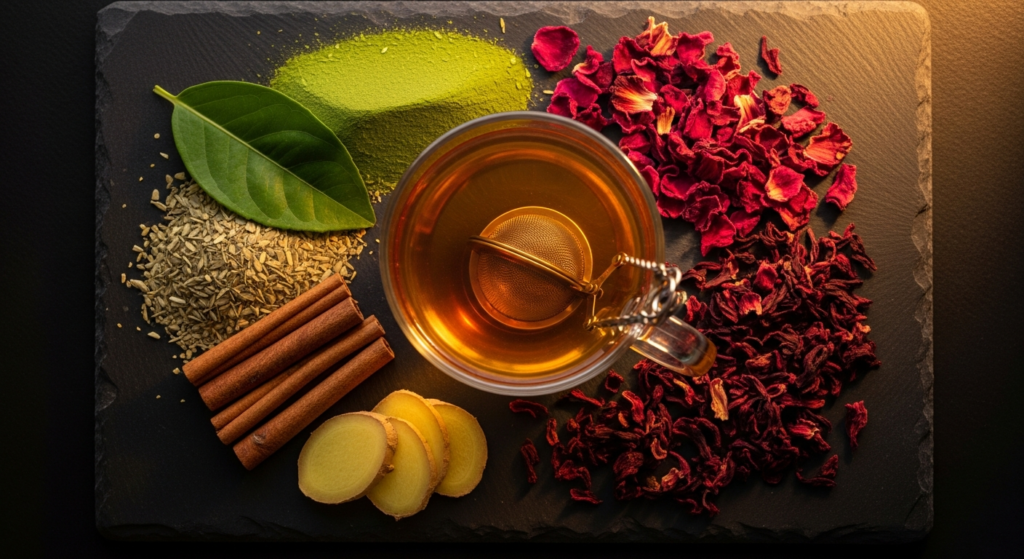
The teas with the strongest evidence for natural appetite suppression are green tea (EGCG), yerba mate, oolong tea, gymnema sylvestre tea, and ginger tea — each working through different mechanisms including GLP-1 support, thermogenesis, and glucose receptor modulation.
Not all “appetite-suppressing” teas are equal. Some have multiple randomized controlled trials. Others rely on a single animal study or nothing at all. Here are five options ranked by published evidence.
5 Appetite-Suppressing Teas Ranked by Evidence
| Tea | Primary Mechanism | Evidence Strength | Key Study |
|---|---|---|---|
| Green Tea (EGCG) | GLP-1 increase + DPP-4 inhibition | Strong (multiple RCTs) | Hsu et al., PLOS ONE, 2014 |
| Yerba Mate | GLP-1 increase + delayed gastric emptying | Strong (human + animal) | Hussein et al., Nutrients, 2025 |
| Oolong Tea | Thermogenesis + fat oxidation | Moderate (human trials) | Rumpler et al., J. Nutr., 2001 |
| Gymnema Sylvestre | Glucose receptor blocking + GLP-1 precursor | Moderate (human + animal) | Tiwari et al., J. Med. Food, 2017 |
| Ginger Tea | GLP-1 signal amplification + satiety | Moderate (human trials) | Mansour et al., Metabolism, 2012 |
1. Green Tea (EGCG)
A double-blinded, placebo-controlled trial found that green tea extract significantly increased GLP-1 levels over 16 weeks in patients with type 2 diabetes (Hsu et al., PLOS ONE, 2014). EGCG may also inhibit DPP-4, extending GLP-1’s active life. A meta-analysis of 11 studies confirmed catechins increased energy expenditure by approximately 4.7% (Hursel et al., International Journal of Obesity, 2009).
2. Yerba Mate
The strongest direct evidence for GLP-1-mediated appetite suppression of any tea. A human trial showed yerba mate extract increased postprandial GLP-1 and reduced energy intake at the next meal. The active pathway involves dihydroferulic acid, a gut-bacteria metabolite that stimulates L-cells directly (Hussein et al., Nutrients, 2025).
3. Oolong Tea
Partially oxidized tea that works primarily through thermogenesis. Rumpler et al. found oolong increased energy expenditure by 2.9% and fat oxidation by 12% compared to water (The Journal of Nutrition, 2001). Zheng et al. showed these effects persisted even during sleep (Nutrients, 2020).
4. Gymnema Sylvestre
Gymnemic acids bind to sweet taste receptors and intestinal glucose receptors, reducing sugar cravings and absorption. It also stimulates proglucagon gene expression — the precursor to GLP-1 — supporting hormonal appetite regulation (Tiwari et al., Journal of Medicinal Food, 2017).
5. Ginger Tea
Ginger’s 6-gingerol does not increase GLP-1 production but amplifies its downstream signaling. Mansour et al. found that 2 g of ginger powder in hot water enhanced thermogenesis and reduced hunger compared to control (Metabolism, 2012). Ginger also slows gastric emptying, prolonging satiety.
Teas to Avoid
- Senna/”detox” teas — Laxatives, not appetite suppressants. They cause water loss, not appetite regulation, and are dangerous with prolonged use.
- Peppermint tea — Often cited but the evidence is limited to one small inhalation study, not tea consumption.
Frequently Asked Questions
How much tea should I drink for appetite control?
Most studies showing benefits used 2-4 cups daily or equivalent extract doses (roughly 400-500 mg EGCG for green tea). More is not necessarily better — excessive caffeine disrupts sleep, which worsens appetite regulation.
When is the best time to drink appetite-suppressing tea?
Twenty to thirty minutes before meals. This allows GLP-1-supportive compounds to begin activating L-cells before food arrives. The yerba mate studies showed pre-meal timing produced stronger effects on subsequent food intake.
Can tea replace appetite suppressant pills?
No. Functional teas offer modest, sustained appetite support — not the dramatic suppression of pharmaceutical GLP-1 agonists. Tea is a daily habit that supports metabolic health over time, not an acute intervention.
Bottom Line
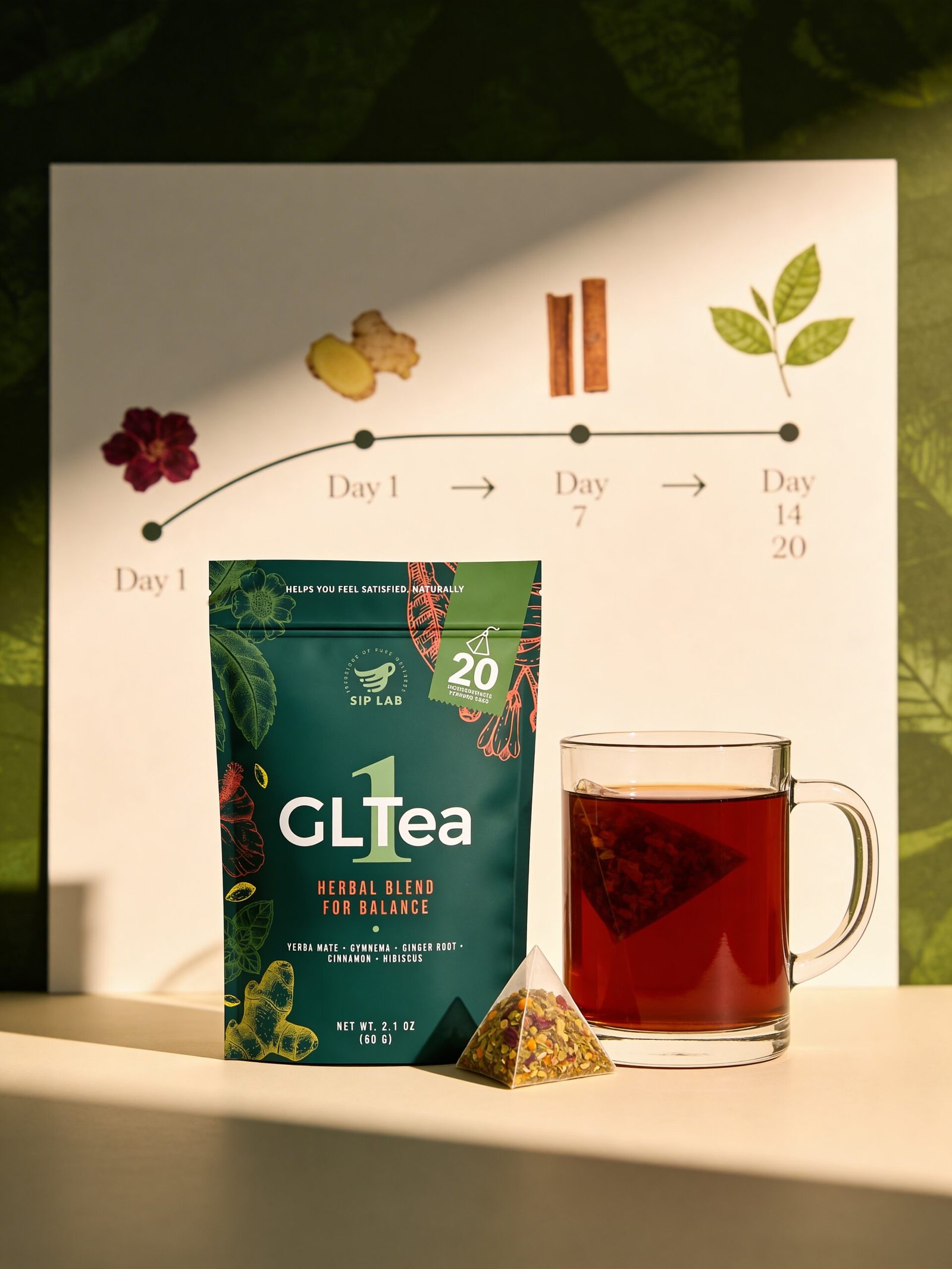
Green tea and yerba mate have the strongest evidence for tea-based appetite support. GLTea-1 combines green tea, yerba mate, gymnema sylvestre, and ginger — every ingredient selected for published evidence, not marketing trends.
*These statements have not been evaluated by the Food and Drug Administration. This product is not intended to diagnose, treat, cure, or prevent any disease.
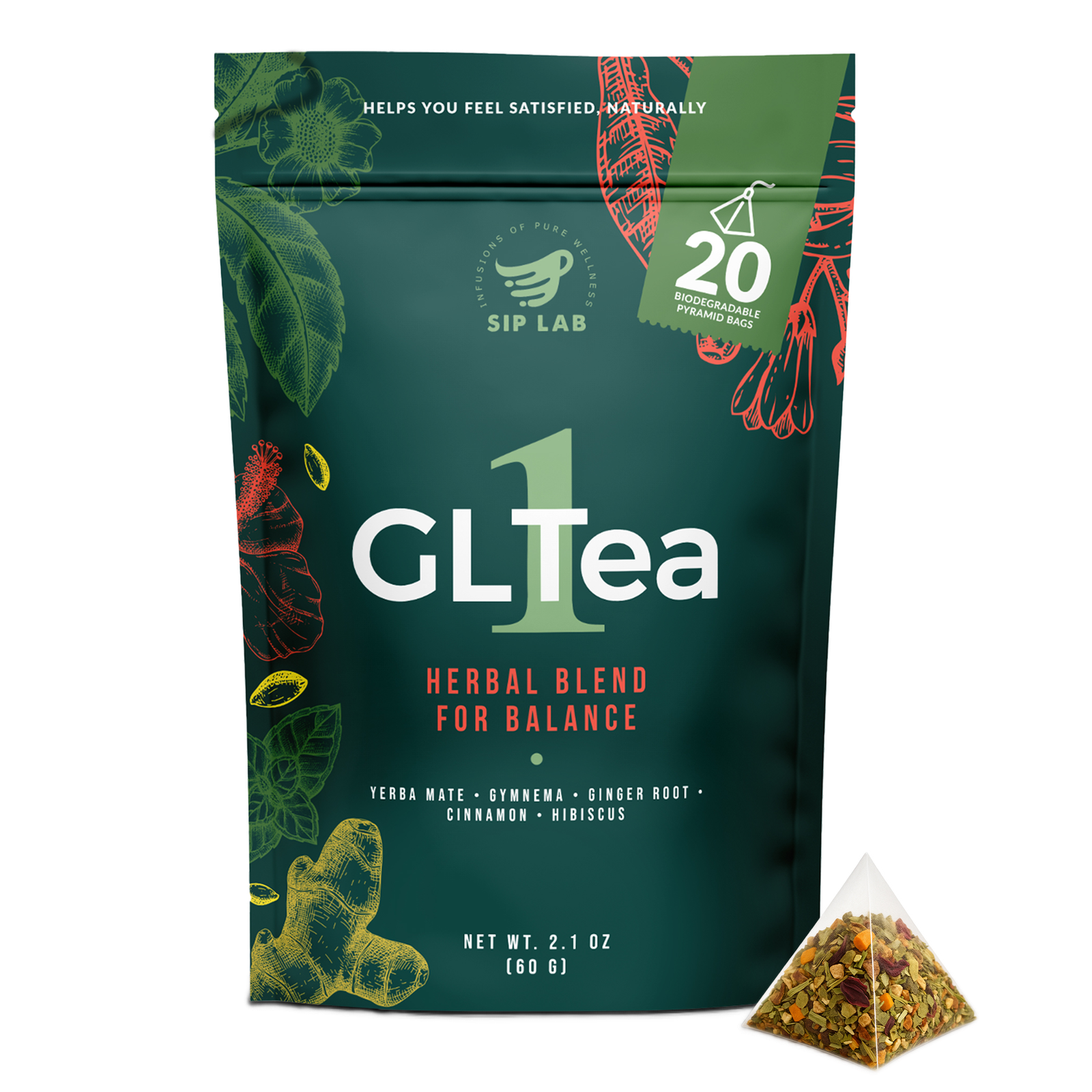
GLTea-1 — Herbal Blend for Balance
Yerba Mate + Gymnema + Ginger Root + Ceylon Cinnamon + Hibiscus
20 biodegradable pyramid bags • $12.99 (on sale) • Under $0.65/cup • No laxatives, no fillers