Put a gymnema leaf on your tongue. Wait sixty seconds. Now eat a piece of chocolate. It will taste like chalk — waxy, bitter, completely devoid of sweetness. That is not a metaphor or a marketing trick. Gymnemic acids physically block the sugar receptors on your tongue, preventing glucose molecules from binding. The same mechanism works in your intestine, where it matters even more.
This plant has been doing this for over 2,000 years. Its Hindi name is gurmar — literally, “sugar destroyer.” And unlike most things in the supplement world, you can verify this one yourself in about ninety seconds.
What Gymnema Sylvestre Actually Is
Gymnema sylvestre is a slow-growing, woody climbing vine native to the tropical forests of India, Africa, and Australia. It belongs to the Apocynaceae family (subfamily Asclepiadaceae) and produces small, elliptical leaves packed with bioactive compounds — the most important being a group of triterpene saponins called gymnemic acids.
The plant has been used in Ayurvedic medicine for over 2,000 years, primarily to treat what practitioners called madhu meha — “honey urine,” an early description of diabetes. Its most common traditional name, gurmar, translates directly from Hindi as “sugar destroyer.” In Sanskrit, it is called madhunashini, which carries the same meaning. These names are not poetic. They describe exactly what happens when the leaf touches your tongue.
Western science caught up slowly. Preliminary studies in the 1920s confirmed the blood sugar-lowering effect, but serious research did not resume until the 1980s. Since then, the active compounds have been extensively characterized and the mechanism is well understood.
How Gymnema Blocks Sugar — The Mechanism
Gymnema works through molecular mimicry. The atomic arrangement of gymnemic acid molecules is structurally similar to glucose. This means they fit into the same receptor sites that sugar molecules use — on your tongue and in your intestine. They get there first, and sugar gets locked out.
On the tongue
Gymnemic acids bind to the sweet taste receptors T1R2 and T1R3 on your taste buds. Because their molecular shape resembles glucose, they occupy these receptor sites and prevent actual sugar molecules from binding. The interaction between the transmembrane domains of human T1R3 and the glucuronosyl group of gymnemic acids is what drives the sweet-suppressing effect (Chemical Senses, 2014).
The result: any sweet food eaten after gymnema exposure tastes flat, bland, or outright unpleasant. The effect is temporary, typically lasting 30 to 60 minutes, though some studies report suppression lasting up to several hours depending on the dose and preparation method.
In the intestine
The same molecular mimicry plays out in the small intestine, but with metabolic consequences. Gymnemic acids fill receptor locations in the absorptive external layers of the intestine, competitively blocking glucose molecules from being absorbed into the bloodstream. This directly reduces the amount of sugar that enters your system after a meal.
This is where gymnema shifts from a curiosity (blocking sugar taste) to a functional intervention (reducing glucose absorption). The intestinal effect is the primary reason researchers have studied it for blood sugar management.
On insulin and beta cells
Beyond blocking absorption, gymnema appears to support the insulin system itself through multiple pathways:
- Enhanced insulin secretion — Gymnemic acids increase calcium influx through voltage-gated calcium channels in pancreatic beta cells, stimulating insulin release (Journal of Endocrinology, 1999)
- Beta cell regeneration — Animal studies show evidence of islet cell and beta cell regeneration with prolonged gymnema supplementation, though human data on this specific mechanism remains limited
- Improved glucose utilization — Gymnema increases enzyme activities involved in glucose uptake and utilization through insulin-dependent pathways
- Beta cell protection — A novel gymnema extract was shown to protect pancreatic beta cells from cytokine-induced apoptosis (Phytomedicine, 2019)
These are three distinct mechanisms — taste suppression, absorption blocking, and insulin support — working simultaneously. That is unusual for a single plant compound.
What the Research Shows
The evidence on gymnema is not as large as what exists for metformin or berberine, but it is consistent and growing. Here are the most relevant studies:
- Zuñiga et al., 2017 (Journal of Medicinal Food) — A randomized, double-blind, placebo-controlled trial gave 24 patients with metabolic syndrome 600 mg of gymnema daily for 12 weeks. Body weight decreased significantly from 81.3 kg to 77.9 kg (p = 0.02), BMI dropped from 31.2 to 30.4 (p = 0.02), and VLDL cholesterol decreased significantly.
- Devangan et al., 2021 (Phytotherapy Research) — A systematic review and meta-analysis of 10 studies with 419 total participants found that gymnema supplementation significantly reduced fasting blood glucose (p < 0.0001), postprandial blood glucose (p < 0.0001), and HbA1c (p < 0.0001) compared to baseline in type 2 diabetes patients.
- Turner et al., 2020 (Nutrients) — 56 healthy adults consumed gymnema mints (4 mg gymnemic acids) in a crossover design. Chocolate consumption decreased by 21.3%, energy intake from sweets dropped by 21.4%, desire for more chocolate decreased by 22.7%, and perceived pleasantness of chocolate fell by 31.0%. Those who self-identified as having a “sweet tooth” experienced even greater reductions.
- Fletcher et al., 2022 (Nutrients) — A 14-day gymnema intervention in 58 adults found that the intervention group consumed significantly fewer chocolate bars (2.65 vs. 3.15, p = 0.02) post-dosing. The behavioral intervention reduced both pleasantness and intake of chocolate in laboratory settings.
- Khan et al., 2019 (Frontiers in Pharmacology) — A comprehensive review confirming gymnema’s anti-diabetic properties across multiple mechanisms: glucose absorption inhibition, insulin secretion stimulation, and beta cell regeneration. The review analyzed phytochemical, pharmacological, and clinical evidence from decades of research.
- Shanmugasundaram et al., 1990 (Journal of Ethnopharmacology) — In one of the foundational studies, 400 mg/day of gymnema extract (GS4) over 18-20 months allowed five type 2 diabetes patients to discontinue their conventional medication while maintaining normal blood glucose levels.
The pattern across studies is consistent: gymnema reduces sugar cravings, decreases sweet food consumption, and improves glycemic markers. The effect sizes are moderate — this is not a pharmaceutical intervention — but they are statistically significant and clinically meaningful.
Gymnema vs. Other Sugar-Craving Approaches
Gymnema is not the only option for managing sugar cravings or blood sugar. Here is how it compares to common alternatives:
| Approach | Primary Mechanism | Evidence Quality | Speed of Effect | Sustainability | Key Limitation |
|---|---|---|---|---|---|
| Gymnema sylvestre | Blocks sugar receptors on tongue and intestine | Moderate — multiple RCTs and meta-analyses | Immediate (taste); weeks (metabolic) | High — no tolerance buildup reported | Most human studies are small |
| Chromium picolinate | Enhances insulin receptor sensitivity and glucose uptake | Mixed — some positive RCTs, inconsistent meta-analyses | 2-4 weeks | Moderate | Effects may be limited to chromium-deficient individuals |
| Berberine | Activates AMPK pathway; reduces glucose production in liver | Strong — large body of clinical evidence | 1-2 weeks | High | GI side effects common; drug interactions |
| Artificial sweeteners | Provides sweetness without calories | Controversial — may increase cravings long-term | Immediate | Low — does not address underlying craving patterns | May disrupt gut microbiome; does not retrain palate |
| Willpower alone | Cognitive restraint | Poor — high failure rate in controlled studies | Immediate (but temporary) | Very low — depletes over time | Does not address physiological drivers of cravings |
Gymnema’s unique advantage is that it works on multiple fronts simultaneously — taste, absorption, and insulin function. Berberine is better studied for blood glucose management specifically, but it does not address the taste and craving side. Chromium helps if you are deficient, but most people are not. Artificial sweeteners dodge the calorie problem while potentially making the craving problem worse.
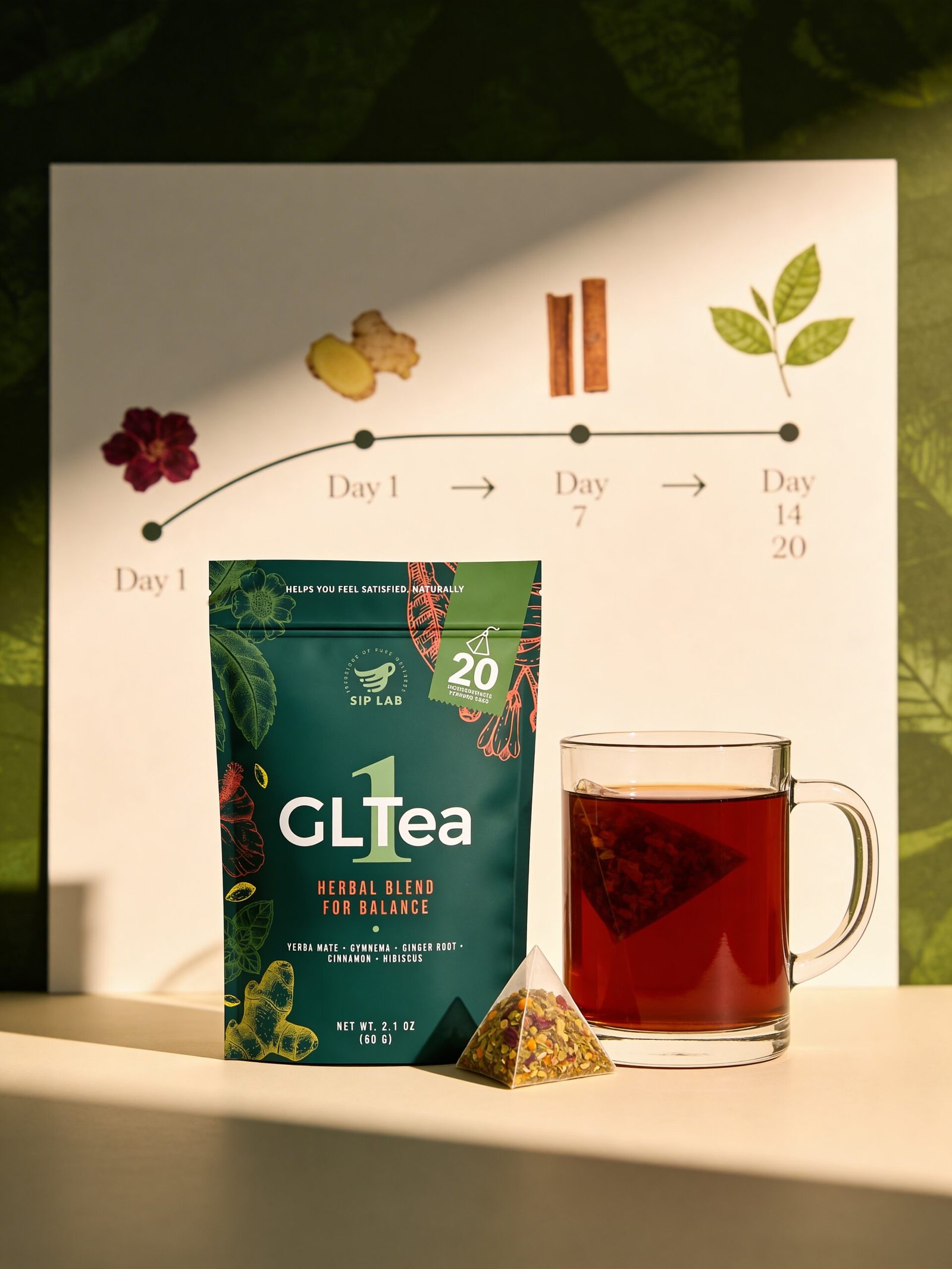
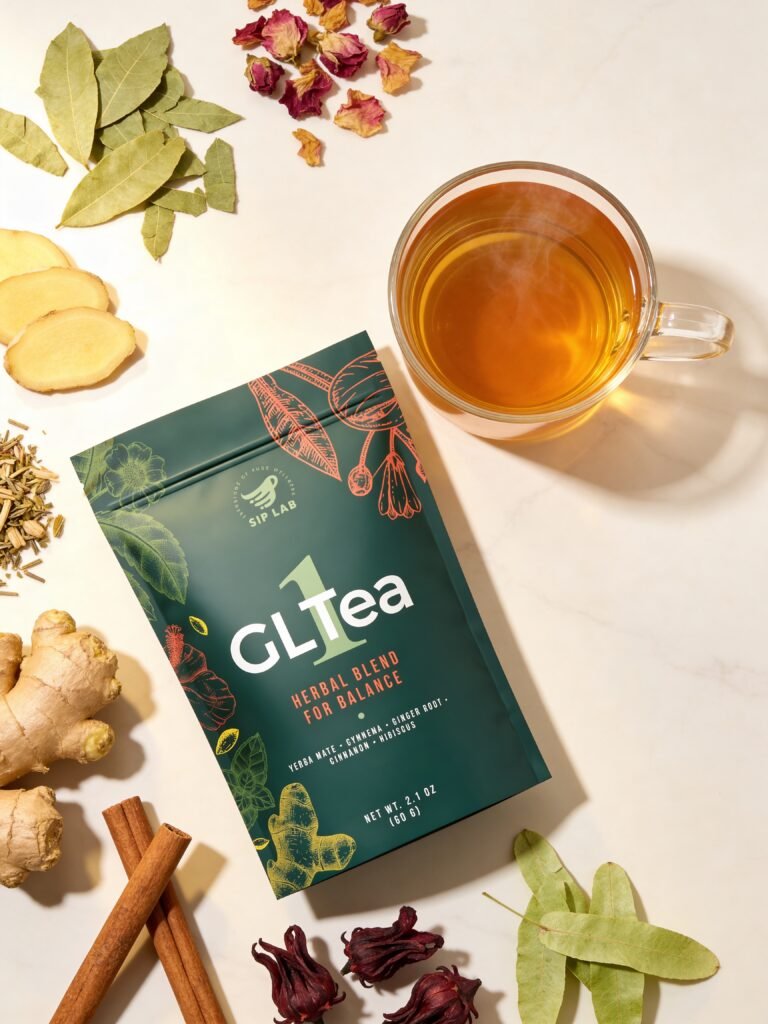
A reasonable approach for someone serious about reducing sugar intake: gymnema for craving and taste modification, combined with ingredients like cinnamon (insulin sensitivity) and ginger (metabolic support). This is the rationale behind formulations like GLTea-1, which combines gymnema with complementary ingredients in a daily tea format.
What to Look For in a Sugar Blocker Tea
Not all gymnema products are equivalent. The active compounds and their concentrations vary significantly across preparations. Here is what matters:
- Gymnemic acid content — This is the active compound. Look for products standardized to a specific percentage of gymnemic acids, typically 25-75%. Raw leaf powder without standardization may contain too little of the active compound to produce measurable effects.
- Dosage — Research-supported daily dosages range from 400 to 600 mg of gymnema extract. The Zuñiga et al. study used 600 mg daily (300 mg twice). The Shanmugasundaram study used 400 mg daily. More is not necessarily better — 400 mg is the most common effective dose in clinical trials.
- Timing — Gymnema is most effective when taken before meals. The taste-blocking effect is immediate, and taking it pre-meal maximizes its ability to reduce glucose absorption in the intestine during digestion.
- Complementary ingredients — Gymnema works well alongside other evidence-based ingredients:
- Cinnamon — improves insulin sensitivity and glucose uptake
- Ginger — supports metabolic function and digestion
- Bitter melon — contains compounds that mimic insulin activity
- Fenugreek — slows carbohydrate digestion and absorption
- Form factor — Tea is one of the most effective delivery methods for gymnema because it contacts the tongue directly (activating the taste-suppression effect) before being absorbed systemically. Capsules bypass the tongue entirely, which means you lose the craving-reduction mechanism.
How to Do the Sugar Taste Test
This is the part you can try yourself. No trust required — the effect is immediate and unmistakable.
- Prepare your sweet test item. A piece of chocolate, a spoonful of honey, a sugar cube, or a slice of fruit. Set it aside where you can reach it quickly.
- Brew gymnema tea. Use a tea containing gymnema sylvestre, or dissolve gymnema leaf powder in hot water. Let it steep for at least 3-5 minutes to fully extract the gymnemic acids.
- Swish, do not gulp. Take a large sip and swish it around your mouth for 30 to 60 seconds. Make sure the liquid contacts all areas of your tongue — the sides, the tip, and the back. Then swallow.
- Immediately eat your sweet item. Take a bite of the chocolate or a spoonful of honey. Do not wait more than a minute.
- Notice what happened. The chocolate will taste waxy and bitter. The honey will taste like warm water with a vaguely floral undertone. Sugar will taste like sand. The sweetness is simply gone.
The effect typically lasts 30 to 60 minutes. During that window, sweet foods lose their appeal entirely — not because you are resisting them, but because the reward signal is physically absent. There is nothing to crave when sugar tastes like nothing.
This is why gymnema is fundamentally different from willpower-based approaches. You are not white-knuckling through a craving. The craving mechanism itself is temporarily disabled. Researchers at Massey University found that this taste disruption reduced chocolate consumption by over 21% even in a single session (Turner et al., 2020). When the sweet taste is gone, the drive to eat more sweet food drops with it.
Try this before and after dinner on a night when you would normally reach for dessert. The experience is striking enough that most people remember it.
Safety and Side Effects
Gymnema has a long safety record. It has been used in traditional medicine for over two millennia, and modern research generally supports its tolerability.
- Generally well-tolerated — Side effects at conventional doses (400-600 mg/day) are uncommon. When they do occur, they are typically mild: nausea, abdominal discomfort, or headache.
- Safe at studied doses — Gymnema is considered safe at doses up to 10 grams per day in short-term studies. The recommended daily dose of 400 mg is well below any reported toxicity threshold. One study reported it as possibly safe when taken for up to 20 months.
- Hypoglycemia risk — This is the primary caution. Because gymnema reduces blood sugar through multiple mechanisms, combining it with diabetes medications (insulin, sulfonylureas, metformin) can push blood sugar too low. If you take blood sugar medication, work with your physician before adding gymnema.
- Pregnancy and breastfeeding — Insufficient safety data exists. Avoid use during pregnancy and lactation until more research is available.
- Rare liver sensitivity — Idiosyncratic liver reactions have been reported in isolated cases, though this appears to be very rare and related to individual sensitivity rather than dose.
- Drug interactions — Beyond diabetes medications, gymnema may interact with other drugs that affect blood sugar. Disclose use to your healthcare provider.
The honest assessment: gymnema has fewer side effects than most pharmaceutical blood sugar interventions, but it is not risk-free. The main concern is hypoglycemia in people already on medication. For otherwise healthy adults at standard doses, the safety profile is strong.
Evidence Snapshot
- Zuñiga et al., 2017 — “Effect of Gymnema sylvestre Administration on Metabolic Syndrome, Insulin Sensitivity, and Insulin Secretion.” Journal of Medicinal Food, 20(8), 750-754.
- Devangan et al., 2021 — “The effect of Gymnema sylvestre supplementation on glycemic control in type 2 diabetes patients: A systematic review and meta-analysis.” Phytotherapy Research.
- Turner et al., 2020 — “Consuming Gymnema sylvestre Reduces the Desire for High-Sugar Sweet Foods.” Nutrients, 12(4), 1046.
- Fletcher et al., 2022 — “The Effect of a 14-Day Gymnema sylvestre Intervention to Reduce Sugar Cravings in Adults.” Nutrients, 14(24), 5287.
- Khan et al., 2019 — “Comprehensive Review on Phytochemicals, Pharmacological and Clinical Potentials of Gymnema sylvestre.” Frontiers in Pharmacology, 10, 1223.
- Shanmugasundaram et al., 1990 — “Use of Gymnema sylvestre leaf extract in the control of blood glucose in insulin-dependent diabetes mellitus.” Journal of Ethnopharmacology, 30(3), 281-294.
- Tiwari et al., 2014 — “Gymnema sylvestre for Diabetes: From Traditional Herb to Future’s Therapeutic.” Current Pharmaceutical Design, 20(7), 1-6.
Frequently Asked Questions
Does gymnema actually block sugar taste?
Yes. Gymnemic acids bind to sweet taste receptors (T1R2 and T1R3) on your tongue, physically preventing sugar molecules from activating them. The effect is not subtle — chocolate tastes like unsweetened cocoa, honey tastes like warm water, and sugar tastes like sand. You can verify this yourself in under two minutes with any gymnema tea.
How long does the sugar-blocking effect last?
Typically 30 to 60 minutes, though some studies report suppression lasting several hours depending on the dose and how long the extract contacts the tongue. A thorough 30-60 second swish tends to produce the longest effect.
Can gymnema help with weight loss?
The evidence is cautiously positive. In the Zuñiga et al. (2017) trial, participants taking 600 mg daily lost an average of 3.4 kg over 12 weeks — a statistically significant result. The mechanism is likely indirect: by reducing sugar absorption and decreasing the desire for sweet foods, overall caloric intake drops. Gymnema is not a weight loss drug, but it removes one of the biggest drivers of excess calorie consumption — sugar cravings.
Is gymnema safe to take daily?
For most healthy adults, yes. It has been studied in trials lasting up to 20 months without significant adverse effects at standard doses (400-600 mg/day). The primary caution applies to people taking blood sugar medications, as the combination can cause hypoglycemia.
How much gymnema should I take?
The most commonly studied effective dose is 400 to 600 mg of gymnema extract per day, standardized to a known percentage of gymnemic acids. Clinical trials typically use 200-300 mg twice daily before meals. The key is consistency — daily use before meals produces the best results for both craving reduction and blood sugar management.
Can I take gymnema with diabetes medication?
Only under medical supervision. Gymnema reduces blood sugar through multiple mechanisms, and combining it with insulin, sulfonylureas, or metformin can push blood sugar dangerously low. This is a documented interaction, not a theoretical one. Talk to your doctor before adding gymnema to any diabetes treatment regimen, and monitor blood glucose more frequently during the transition.
The Bottom Line
Gymnema sylvestre is one of the few herbal compounds where the effect is immediately verifiable. You do not need to take it for weeks and hope something changes. Brew it, swish it, eat something sweet, and the mechanism proves itself in real time. That taste-blocking effect is backed by the same molecular mimicry that reduces glucose absorption in the intestine — the metabolic side that actually matters for long-term health.
The clinical evidence supports modest but consistent improvements: reduced sugar cravings, lower sweet food intake, decreased fasting blood glucose, and moderate weight loss. It will not replace medication for diagnosed diabetes, and it is not a miracle compound. But as a daily, evidence-based tool for reducing sugar’s grip on your diet and your blood sugar, gymnema has earned its 2,000-year-old name.
GLTea-1 includes gymnema sylvestre alongside cinnamon, ginger, and other complementary ingredients — designed to be brewed and swished daily before meals.
This article is for informational purposes only and is not intended to diagnose, treat, cure, or prevent any disease. These statements have not been evaluated by the Food and Drug Administration. Consult your healthcare provider before starting any new supplement, especially if you take medication for diabetes or other blood sugar conditions.