When you stop taking Ozempic or another GLP-1 receptor agonist, your body does not stay where the drug left it. The STEP 1 extension trial — the largest study on semaglutide discontinuation — found that participants regained two-thirds of their lost weight within one year of stopping the medication. On average, people who had lost 17.3% of body weight on semaglutide gained back 11.6 percentage points within 52 weeks of discontinuation (Diabetes, Obesity and Metabolism, 2022). A 2025 meta-analysis in eClinicalMedicine confirmed the pattern: discontinuing GLP-1 receptor agonists resulted in an average body weight regain of 5.63 kg, with semaglutide users regaining an average of 9.69 kg.
Those numbers are not meant to scare you. They are meant to prepare you. Weight regain after GLP-1 discontinuation is not a personal failure — it is a predictable biological response that you can plan for, mitigate, and in many cases significantly reduce with the right strategy.
Here is the science-backed playbook for maintaining weight loss after stopping GLP-1 drugs.
Why Weight Regain Happens: The Biology You Need to Understand
GLP-1 drugs like semaglutide (Ozempic, Wegovy) and tirzepatide (Mounjaro, Zepbound) work by mimicking and amplifying a hormone your body already produces. When you inject these medications at therapeutic doses, they suppress appetite, slow gastric emptying, and improve insulin sensitivity at levels your body cannot match on its own. Remove the drug, and several biological systems rebound.
- Appetite hormone rebound. GLP-1 drugs suppress ghrelin (the hunger hormone) and enhance satiety signaling. When you stop, ghrelin levels rebound — often to levels higher than your pre-treatment baseline. This is not a lack of willpower. It is a hormonal reset that makes you genuinely, physiologically hungrier than you were before starting the medication.
- Metabolic adaptation. Your body adjusted its metabolic rate downward during weight loss. This is a survival mechanism — your metabolism slows to match your lower body weight. The problem is that this metabolic adaptation persists after you stop the drug, meaning you burn fewer calories at your new weight than someone who was always that weight. Research shows this adaptation can persist for months to years.
- Gut microbiome changes. Emerging research suggests GLP-1 drugs alter the gut microbiome composition in ways that support weight loss. When the drug is removed, the microbiome shifts back toward its pre-treatment state. Since gut bacteria influence appetite signaling, energy extraction from food, and inflammation, this shift contributes to weight regain through mechanisms we are only beginning to understand.
- Lean mass loss during treatment. This is the factor most people underestimate. Studies show that up to 25-40% of weight lost on GLP-1 medications can be lean mass — muscle and bone — rather than fat alone. Less muscle means a lower basal metabolic rate, which means fewer calories burned at rest, which means weight regain happens faster on the same diet that maintained your weight during treatment.
Understanding these mechanisms is not academic. Each one points to a specific, actionable counter-strategy. The 90-day plan below addresses all four.
The 90-Day Post-Ozempic Transition Plan
This is not a crash program. It is a structured transition designed to stabilize your weight, rebuild metabolic capacity, and establish habits that replace what the drug was doing for you. The timeline matters — research consistently shows that the first 12 weeks after discontinuation are the highest-risk period for rapid regain.
Days 1-30: Stabilization Phase
The goal is not weight loss. It is weight stability. Your appetite will increase. Your cravings may return. This is normal and expected.
- Track your weight weekly, not daily. Daily fluctuations from water retention, digestion, and hormonal shifts will create noise that obscures the real trend. Weigh yourself once per week, same day, same time, same conditions.
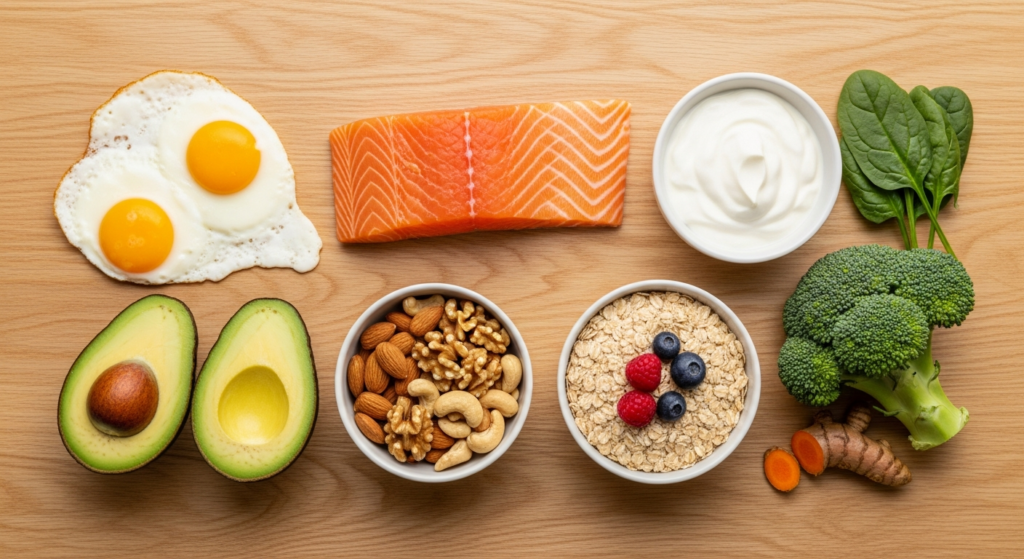
- Increase protein immediately. Aim for 1.2-1.6 grams of protein per kilogram of body weight daily. Protein is the most satiating macronutrient and the most critical for preserving the lean mass you still have. Front-load protein at breakfast — a high-protein breakfast blunts ghrelin for hours.
- Maintain your meal timing. If you were eating on a regular schedule during treatment, keep it. Erratic meal timing disrupts circadian-linked appetite hormones and makes hunger harder to manage.
- Start or continue resistance training. If you were not training during treatment, start now with 2-3 sessions per week. If you were, maintain or slightly increase volume. This is the single most important intervention for metabolic maintenance.
- Sleep 7-9 hours. Sleep deprivation increases ghrelin by 28% and decreases leptin by 18%. During a period when your appetite hormones are already rebounding, poor sleep will accelerate regain faster than any dietary mistake.
Days 31-60: Rebuilding Phase
By now your appetite has likely increased noticeably. The goal shifts to building sustainable habits that manage hunger without pharmaceutical support.
- Adopt a protein-first eating strategy. At every meal, eat protein before carbohydrates or fats. This triggers natural GLP-1 release from L-cells in your gut. It is a fraction of what the drug provided, but every bit of natural GLP-1 production helps.
- Add fiber strategically. Soluble fiber (oats, beans, flaxseed) is fermented by gut bacteria into short-chain fatty acids that stimulate L-cells to release GLP-1. Target 25-35 grams of fiber daily, increasing gradually to avoid GI discomfort.
- Introduce volume eating. High-volume, low-calorie foods (leafy greens, cucumbers, berries, broth-based soups) activate stretch receptors in the stomach that signal fullness — a mechanical pathway that does not depend on GLP-1.
- Progressive overload in training. Increase your resistance training weights by 5-10% every two weeks. The goal is not just maintaining muscle — it is building new lean mass to increase your resting metabolic rate. Prioritize compound movements: squats, deadlifts, rows, and presses.
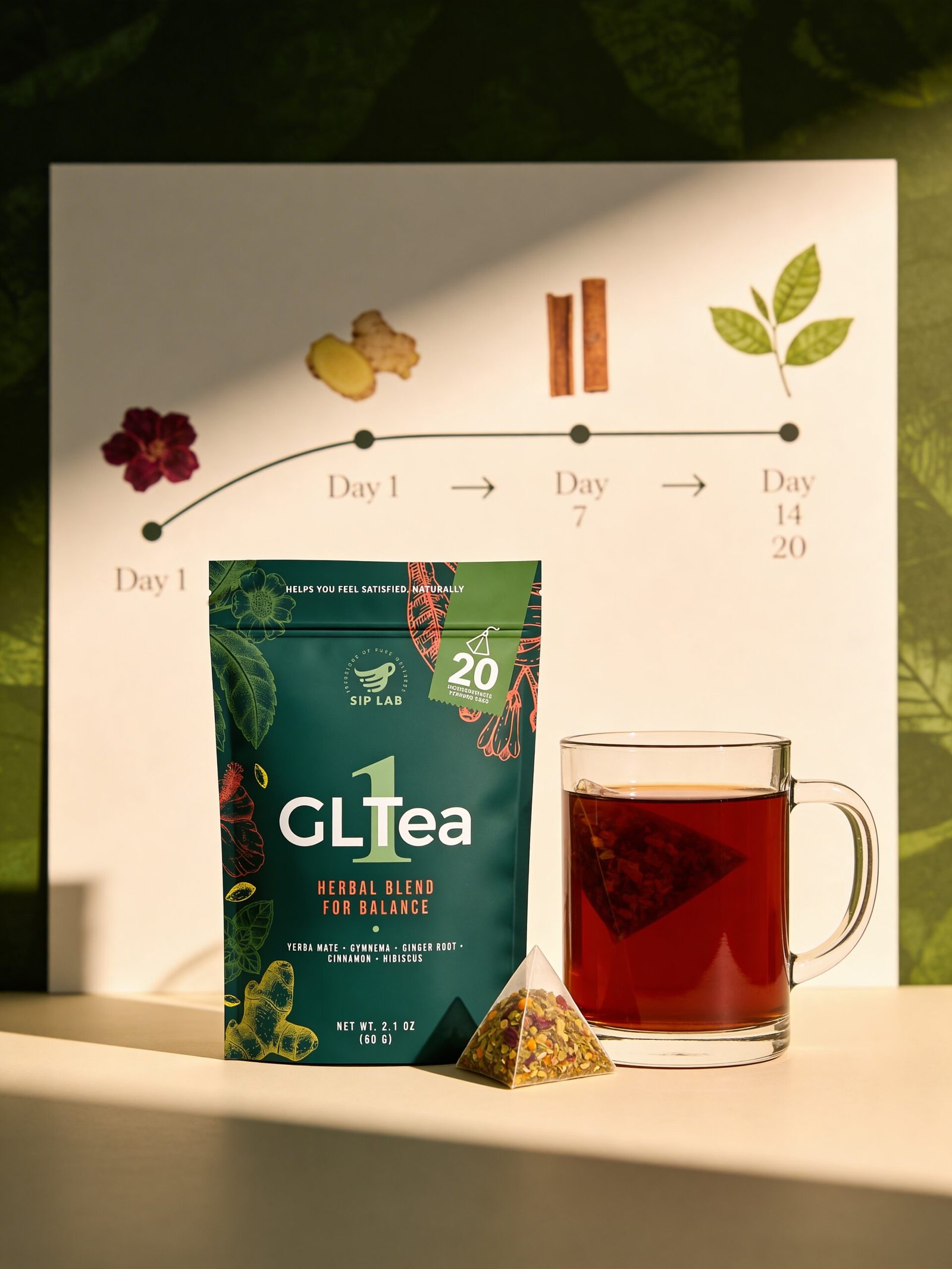
- Consider natural GLP-1 support. Certain plant compounds have been shown in clinical research to support GLP-1 production through mechanisms distinct from pharmaceuticals. EGCG from green tea may inhibit DPP-4, the enzyme that degrades GLP-1, extending its active life in the bloodstream (PLOS ONE, 2014). Yerba mate supplementation increased GLP-1 gene expression and plasma GLP-1 levels in studies, with the active mechanism involving dihydroferulic acid, a microbial metabolite that directly stimulates L-cell GLP-1 production (Nutrients, 2025). Berberine activates AMPK, a key enzyme in energy metabolism. GLTea-1 combines several of these compounds — yerba mate, gymnema sylvestre, green tea, and berberine — into a daily tea format. It will not replicate what semaglutide does at pharmacological doses. But as part of a comprehensive transition strategy, natural GLP-1 support can provide a meaningful assist during the period when your body is readjusting.
Days 61-90: Sustainability Phase
The goal here is locking in the habits and systems that will carry you through months 4-12 and beyond — the period where most regain accelerates if no plan is in place.
- Establish your maintenance calorie target. By day 60, your weight trend should be relatively stable. Use that data to calculate your actual maintenance calories — not a formula estimate, but what your body actually needs based on 8 weeks of tracking. This number may be 10-15% lower than standard calculators predict due to metabolic adaptation.
- Build non-negotiable movement habits. Research from the National Weight Control Registry shows that people who maintain significant weight loss average 60 minutes of moderate activity daily. This does not need to be gym time — walking, cycling, active commuting all count. The key is consistency, not intensity.
- Plan for setbacks. Weight regain is not linear. You will have weeks where the scale goes up. Define in advance what a “red line” looks like (5 lbs above maintenance, for example) and what your response protocol is. Having a plan removes the emotional decision-making that leads to spiraling.
- Get metabolic bloodwork. At the 90-day mark, get a comprehensive metabolic panel: fasting glucose, HbA1c, insulin, lipid panel, and thyroid function. The STEP 1 extension found that HbA1c increased by 0.25% after discontinuation. Your doctor can use these numbers to adjust your plan or discuss whether restarting medication makes sense.
The Protein-First Strategy: Why Muscle Preservation Is Everything
This deserves its own section because it is the single most underappreciated factor in post-GLP-1 weight maintenance.
When you lose weight on semaglutide or tirzepatide, not all of that weight is fat. Clinical data shows that 25-40% of weight lost on GLP-1 medications can be lean mass. For someone who lost 40 pounds on Ozempic, that could mean 10-16 pounds of muscle gone. That muscle was burning approximately 6 calories per pound per day at rest — meaning you may have lost 60-96 calories of daily resting metabolic capacity.
That sounds small. It is not. Over a year, 80 fewer calories burned per day equals 29,200 calories — roughly 8 pounds of fat. This is how gradual regain happens even when you think you are eating the same amount as before.
The fix is aggressive protein intake combined with resistance training:
- Protein target: 1.2-1.6 g/kg body weight daily (higher end if you are actively resistance training). For a 170-pound person, that is 93-124 grams per day.
- Distribution matters. Spread protein across 3-4 meals rather than loading it all at dinner. Research shows that muscle protein synthesis is maximized when each meal contains at least 25-30 grams of protein.
- Prioritize leucine-rich sources. Leucine is the amino acid that most directly triggers muscle protein synthesis. High-leucine foods include whey protein, eggs, chicken, fish, and soybeans.
- Resistance training is non-negotiable. Protein without resistance training does not build muscle. Train 3-4 times per week with progressive overload. Focus on compound movements that recruit the most muscle mass: squats, deadlifts, bench press, rows, and overhead press.
Exercise Programming for Metabolic Maintenance
Exercise after GLP-1 discontinuation serves two purposes: preserving and building lean mass (resistance training) and maintaining cardiovascular fitness while burning additional calories (aerobic training). Both matter, but they are not equal.
- Resistance training (3-4x/week). This is the priority. Focus on progressive overload — gradually increasing weight, reps, or sets over time. A simple structure: upper body push/pull on days 1 and 3, lower body on days 2 and 4. Each session should include 4-6 exercises, 3-4 sets each, at a weight that challenges you for 8-12 reps.
- Zone 2 cardio (150+ minutes/week). Low-intensity steady-state cardio — walking, cycling, swimming at a conversational pace — burns calories without creating excessive cortisol stress or interfering with muscle recovery. The American College of Sports Medicine recommends 150-300 minutes per week for weight maintenance.
- NEAT (non-exercise activity thermogenesis). Research shows that NEAT — the calories burned through daily movement like walking, fidgeting, standing, and doing chores — drops significantly after weight loss. Consciously increasing daily steps (target 8,000-10,000) and reducing sedentary time can offset 200-300 calories per day.
- Avoid excessive cardio. Running 60 minutes daily while eating in a caloric deficit will accelerate muscle loss, not prevent it. The research is clear: excessive endurance exercise without adequate protein and resistance training worsens body composition after GLP-1 discontinuation.
The Psychological Component: The Identity Shift
This is the part nobody talks about, and it matters more than most people expect.
On GLP-1 medication, appetite suppression is automatic. You do not think about food the same way. Cravings quiet down. Portion control is effortless. Your relationship with food fundamentally changes — not because you changed, but because the drug changed your neurochemistry.
When you stop, that neurochemical support disappears. And you are left with the same brain, the same habits, and the same emotional patterns you had before — except now you are at a lower weight that your body is actively fighting to regain.
The people who maintain weight loss after stopping GLP-1 drugs are the ones who used the medication period to build new behavioral patterns, not just enjoy the appetite suppression:
- Build an identity around the habits, not the drug. “I am someone who eats protein first” is a more durable identity than “I am someone on Ozempic.” The habits should feel like yours, not like side effects.
- Develop hunger tolerance. On GLP-1 drugs, hunger is muted. Off them, it returns. Practice sitting with moderate hunger for 20-30 minutes before eating. Research shows hunger peaks and then decreases — the wave passes. Learning to ride that wave is a skill, and it gets easier with practice.
- Separate emotional eating from physical hunger. If you ate emotionally before treatment and relied on the drug to override those impulses, the impulses will return. Consider working with a therapist who specializes in eating behavior. This is not weakness — it is strategic resource allocation.
- Set process goals, not outcome goals. “I will eat 120g of protein today” is actionable. “I will not regain weight” is anxiety-producing and uncontrollable on a daily basis. Focus on the inputs and let the outcomes follow.
On Ozempic vs. Transitioning Off vs. Fully Off: What Changes
| Factor | On GLP-1 Medication | Transitioning Off (0-90 days) | Fully Off (90+ days) |
|---|---|---|---|
| Appetite | Significantly suppressed | Gradually returning; may overshoot baseline | Returned to pre-treatment or slightly above |
| GLP-1 levels | Pharmacologically elevated | Dropping; natural production resuming | Back to natural baseline |
| Metabolic rate | Reduced from weight loss | Still reduced; slow recovery | Partially recovered if muscle is rebuilt |
| Lean mass | At risk if not training | Critical window to rebuild | Stable if resistance training is consistent |
| Weight trend | Losing or stable | May increase 2-5 lbs (normal fluctuation) | Stable if plan is followed; regain risk if not |
| Blood sugar (HbA1c) | Improved | May begin rising | Avg increase of 0.25% vs. on-treatment levels |
| Key strategy | Use suppressed appetite to build habits | Protein-first, resistance training, sleep | Maintain habits; monitor; adjust calories |
| Natural GLP-1 support role | Not needed (drug provides it) | Most valuable during this window | Ongoing daily support for appetite regulation |
Evidence Snapshot
- STEP 1 Extension Trial (2022). Participants who discontinued semaglutide 2.4 mg after 68 weeks regained two-thirds of their weight loss within one year. Average regain was 11.6 percentage points of the 17.3% body weight lost. Cardiometabolic improvements also partially reversed. Published in Diabetes, Obesity and Metabolism. (PubMed)
- GLP-1 Discontinuation Meta-Analysis (2025). A systematic review in eClinicalMedicine (The Lancet) analyzed metabolic rebound after GLP-1 RA discontinuation. GLP-1 RA cessation resulted in mean body weight regain of 5.63 kg and HbA1c increase of 0.25%. Semaglutide users regained an average of 9.69 kg. (eClinicalMedicine)
- Lean Mass Loss During GLP-1 Treatment. The ACE Fitness review (2025) confirmed that up to 25-40% of weight lost on GLP-1 medications can be lean mass. Resistance training and adequate protein intake (1.2-1.6 g/kg/day) significantly mitigate this effect. (ACE Fitness)
- Yerba Mate and GLP-1 Production. A 2025 study in Nutrients found that the incretin effect of yerba mate is partially dependent on gut-mediated metabolism of ferulic acid into dihydroferulic acid, which directly stimulates GLP-1 production in L-cells. Yerba mate supplementation significantly increased GLP-1 gene expression and plasma levels. (Nutrients)
- EGCG and DPP-4 Inhibition. A randomized, placebo-controlled trial found that 500 mg of green tea extract three times daily for 16 weeks significantly increased GLP-1 levels in patients with type 2 diabetes. EGCG may inhibit DPP-4, extending GLP-1’s active life. Published in PLOS ONE, 2014.
- Protein Timing and Muscle Protein Synthesis. Research in the Journal of the International Society of Sports Nutrition demonstrated that distributing protein intake across meals (25-30g per meal) optimizes muscle protein synthesis compared to consuming the same total amount in fewer, larger doses.
Frequently Asked Questions
How much weight will I regain after stopping Ozempic?
The STEP 1 extension study found an average regain of two-thirds of lost weight within one year of stopping semaglutide. However, this was in a group without a structured maintenance plan. People who implement protein-first eating, resistance training, and consistent daily movement can significantly reduce this. The goal is not zero regain — some fluctuation is normal — but limiting regain to 10-20% of lost weight rather than 66%.
Can natural supplements replace Ozempic for weight maintenance?
No. Natural GLP-1 support compounds like yerba mate, green tea extract, and berberine operate through similar pathways but at a fraction of the potency. Semaglutide produces average weight loss of 15-17% of body weight. Natural supplements, even in combination, will not match that. What they can do is provide modest appetite support during the transition period as part of a comprehensive plan that includes diet, exercise, and behavioral changes. Think of them as one tool in a larger toolkit, not a replacement.
How long does it take for appetite to return after stopping GLP-1 drugs?
Most people notice increased appetite within 1-3 weeks of their last injection, depending on the drug’s half-life. Semaglutide has a half-life of approximately one week, so appetite typically returns gradually over 2-4 weeks. Some people experience a rebound effect where appetite temporarily exceeds their pre-treatment baseline. This usually normalizes within 2-3 months.
Should I taper off Ozempic or stop suddenly?
Discuss tapering with your prescribing physician. Some doctors recommend reducing the dose gradually (e.g., stepping down from 2.4 mg to 1.7 mg to 1.0 mg over several weeks) to ease the transition. Others prefer a direct stop. There is no strong clinical consensus yet on which approach produces better long-term outcomes for weight maintenance. What matters more than the stop method is having a maintenance plan ready before you discontinue.
Is muscle loss from GLP-1 drugs permanent?
No. Lost muscle can be rebuilt through consistent resistance training and adequate protein intake. However, rebuilding muscle is slower than losing it. Expect 3-6 months of consistent training to recover lean mass lost during treatment. The earlier you start resistance training — ideally while still on medication — the less you will need to rebuild.
What should I eat on my first day off Ozempic?
The same things you ate on your last day on it. The transition is not a dietary reset — it is a continuation. Focus on protein-first meals (aim for 30g protein at breakfast), adequate fiber (vegetables, legumes, whole grains), and healthy fats. Avoid the trap of “celebrating” with foods you restricted during treatment. Your appetite will increase naturally over the coming weeks. Meeting it with nutrient-dense, high-satiety foods sets the right trajectory.
The Bottom Line
Weight regain after stopping GLP-1 drugs is not inevitable at the scale the studies suggest — but only if you plan for it. The biology is working against you: appetite hormones rebound, metabolic rate stays depressed, and lost muscle means fewer calories burned at rest. The 90-day transition plan addresses each of these factors with specific, evidence-backed interventions. Prioritize protein (1.2-1.6 g/kg daily), resistance train consistently (3-4x/week), support natural GLP-1 production through diet and compounds like those in GLTea-1, and build behavioral habits that outlast the medication. The drug gave you a head start. What you do next determines whether you keep it.
*These statements have not been evaluated by the Food and Drug Administration. This product is not intended to diagnose, treat, cure, or prevent any disease. This product is a dietary supplement, not a medication. Consult your physician before making changes to any medication regimen, including GLP-1 receptor agonists. This article is for informational purposes only and should not be considered medical advice.
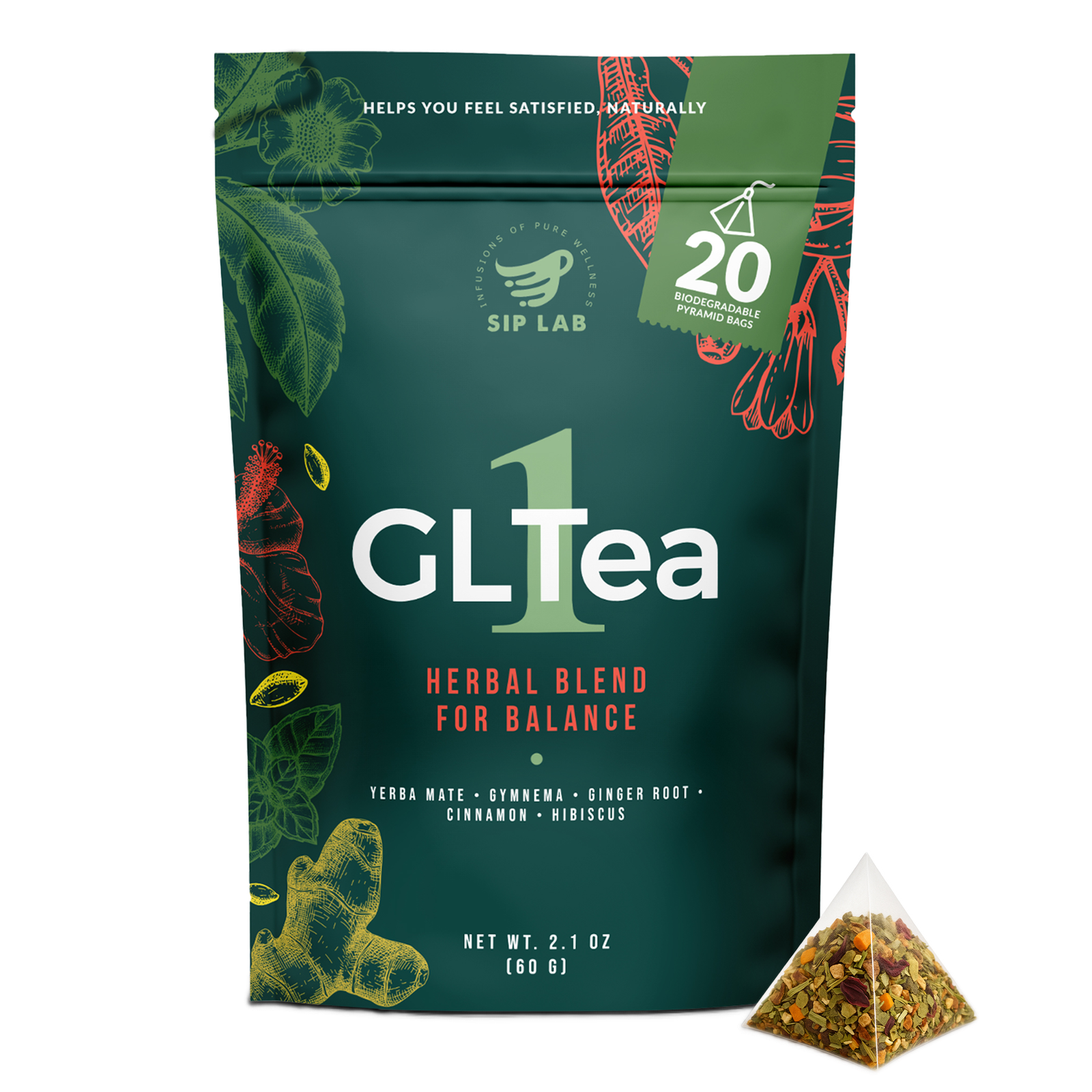
GLTea-1 — Herbal Blend for Balance
Yerba Mate + Gymnema + Ginger Root + Ceylon Cinnamon + Hibiscus
20 biodegradable pyramid bags • \$12.99 (on sale) • Under \$0.65/cup