GLP-1 drugs have transformed weight loss. Semaglutide (Ozempic, Wegovy) and tirzepatide (Mounjaro, Zepbound) are producing results that no supplement, diet, or exercise program has ever matched. That is the honest starting point.
But here is the other side: these drugs cost $935 to $1,349 per month at list price, cause nausea in up to 50% of users, and when you stop taking them, two-thirds of the weight comes back within a year. The treatment is designed to be indefinite, which means the true lifetime cost can exceed $200,000.
Millions of people are now asking: is there a natural alternative worth trying? The answer depends entirely on what you are trying to achieve. Here is what the science actually says.
What GLP-1 Actually Does (And Why It Matters)
GLP-1 (glucagon-like peptide-1) is a hormone your body already produces. When you eat, specialized cells in your intestine called L-cells release GLP-1 into your bloodstream. Once there, it does several things:
- Signals satiety to your brain — you feel full sooner and stay satisfied longer
- Slows gastric emptying — food moves through your stomach more slowly, extending that full feeling
- Stimulates insulin secretion — helps regulate blood sugar after meals
- Suppresses glucagon — reduces the signal that tells your liver to release stored sugar
The problem is that natural GLP-1 is broken down within minutes by an enzyme called DPP-4. Drugs like semaglutide are synthetic versions of GLP-1 that resist this breakdown, keeping levels elevated for days instead of minutes. They override the system from outside, creating a powerful but artificial suppression of appetite.
Natural approaches work differently. Instead of flooding your body with a synthetic hormone, certain plant compounds support your body’s own GLP-1 production — nudging the system rather than overriding it. The effect is gentler but real, and it works with your biology rather than replacing it.
The Real Cost Comparison
This is where the conversation gets concrete. Here is what you will actually pay across the full spectrum of options:
| Approach | Monthly Cost | Annual Cost |
|---|---|---|
| Ozempic/Wegovy (list price, no insurance) | $935 – $1,349 | $11,220 – $16,188 |
| Ozempic/Wegovy (Novo Nordisk self-pay) | $349 | $4,188 |
| Ozempic/Wegovy (with good insurance) | $0 – $25 | $0 – $300 |
| Compounded semaglutide | $179 – $299 | $2,148 – $3,588 |
| Full natural supplement stack | $55 – $105 | $660 – $1,260 |
| Functional tea-based approach | $15 – $40 | $180 – $480 |
The Hidden Costs of GLP-1 Drugs
The sticker price does not tell the whole story. GLP-1 drugs require ongoing medical supervision, which adds significantly to the true cost:
- Doctor visits — monitoring appointments add $200 to $400 per month without insurance
- Lab work — periodic blood panels are billed separately and required for safe ongoing use
- Dose escalation — costs increase as your dose titrates upward over time
- Prior authorization — almost universally required, adding administrative burden and potential gaps in treatment
When you factor in monitoring, the annual out-of-pocket cost without insurance climbs to $14,400 to $16,800 or more. And because GLP-1 drugs are designed as indefinite therapy — not a course of treatment — the true lifetime cost at current pricing can exceed $200,000.
Insurance Is Not a Guarantee
Even with insurance, access is not straightforward. Many large insurers moved Ozempic to Tier 3 in 2025-2026, meaning 20-40% coinsurance until you hit your out-of-pocket maximum. Medicare Part D currently excludes GLP-1 drugs for weight loss entirely. Only 44% of employers with 500 or more employees cover weight loss medications. For the majority of Americans, the out-of-pocket cost is real and ongoing.
The Effectiveness Gap: Let’s Be Honest
This is the section that matters most for trust. The numbers are not close, and pretending otherwise does nobody any good.
| Approach | Expected Weight Loss | Timeframe | Evidence Quality |
|---|---|---|---|
| Semaglutide (Ozempic/Wegovy) | 14.9 – 17.4% body weight | 68 weeks | Very strong (Phase 3 RCTs) |
| Tirzepatide (Mounjaro/Zepbound) | Up to 20.2% body weight | 72 weeks | Very strong (Phase 3 RCTs) |
| Berberine (1g/day) | ~4 lbs (~1-2%) | 8-12 weeks | Moderate (systematic review) |
| Yerba mate supplementation | Significant fat mass reduction | 12 weeks | Moderate (RCT) |
| Green tea EGCG (high dose) | ~2.4 lbs (~1.5%) | 12 weeks | Moderate (RCT) |
| Gymnema sylvestre | ~7.5 lbs (~4.2%) | Variable | Moderate (RCT) |
| Combined natural + lifestyle | Potentially 5-8% | 12+ weeks | Limited (extrapolated) |
GLP-1 drugs produce roughly 5 to 10 times more weight loss than any individual natural compound. That is not a close comparison in terms of raw numbers.
But here is where context matters. A 5-8% reduction in body weight — which is achievable through combined natural approaches and lifestyle changes — crosses the threshold that physicians consider clinically meaningful. At that level, you see real improvements in blood pressure, blood sugar regulation, and cardiovascular risk markers.
The honest framing: If you need to lose 50 or more pounds for urgent health reasons, talk to your doctor about GLP-1 drugs. They work, and they work well. If you are looking for sustainable 5-10% weight management support without side effects or a four-figure monthly bill, natural approaches deserve serious consideration.
The Ingredients That Actually Affect GLP-1
Not every “natural GLP-1 support” ingredient has the same level of evidence. Here is what the research actually shows for each major compound.
Berberine
Berberine is the most studied natural compound in the GLP-1 pathway. It stimulates GLP-1 secretion from intestinal L-cells, and its metabolites (berberrubine and palmatine) also increase GLP-1 production.
- GLP-1 mechanism confirmed — Xie et al. (2023) published a comprehensive review in Frontiers in Pharmacology establishing berberine’s GLP-1 pathway
- Human evidence — Zhang et al. (2014) showed 8 weeks of berberine significantly increased plasma postprandial GLP-1 levels (BMC Complementary and Alternative Medicine)
- Weight loss data — a systematic review of 35 studies found average weight loss of approximately 4 lbs with berberine at 500 mg daily
- Important caveat — the AAFP has stated that berberine “lacks rigorous evidence” for weight loss and “has potential harms,” particularly drug interactions
Yerba Mate
Yerba mate contains dicaffeoyl quinic acids and matesaponins that directly increase GLP-1 secretion, with effects confirmed in both animal and human studies.
- GLP-1 increase in humans — Andersen and Fogh (2017) showed GLP-1 levels after breakfast were significantly higher in the yerba mate group in a study of overweight women (Journal of Functional Foods)
- Fat mass reduction — Kim et al. (2015) conducted a randomized, double-blind, placebo-controlled trial showing significant decreases in body fat mass and percent body fat after 12 weeks (BMC Complementary Medicine and Therapies)
- Mechanism established — a 2025 study in Nutrients confirmed the incretin effect of yerba mate is partially dependent on gut-mediated metabolism of ferulic acid
Green Tea EGCG
EGCG (epigallocatechin gallate), the primary catechin in green tea, has direct evidence of GLP-1 stimulation in a well-designed human trial.
- GLP-1 nearly doubled — Liu et al. (2014) conducted a randomized, double-blind, placebo-controlled trial showing GLP-1 increased from 1.4 to 2.6 (p=0.001) in the EGCG group (PLOS One)
- Weight loss demonstrated — Chen et al. (2016) showed significant weight reduction after 12 weeks of high-dose EGCG in a placebo-controlled trial (Clinical Nutrition)
- Synergy with caffeine — combined EGCG and caffeine inhibited gastric motility by elevating GLP-1 secretion in a 2018 study (Journal of Functional Foods)
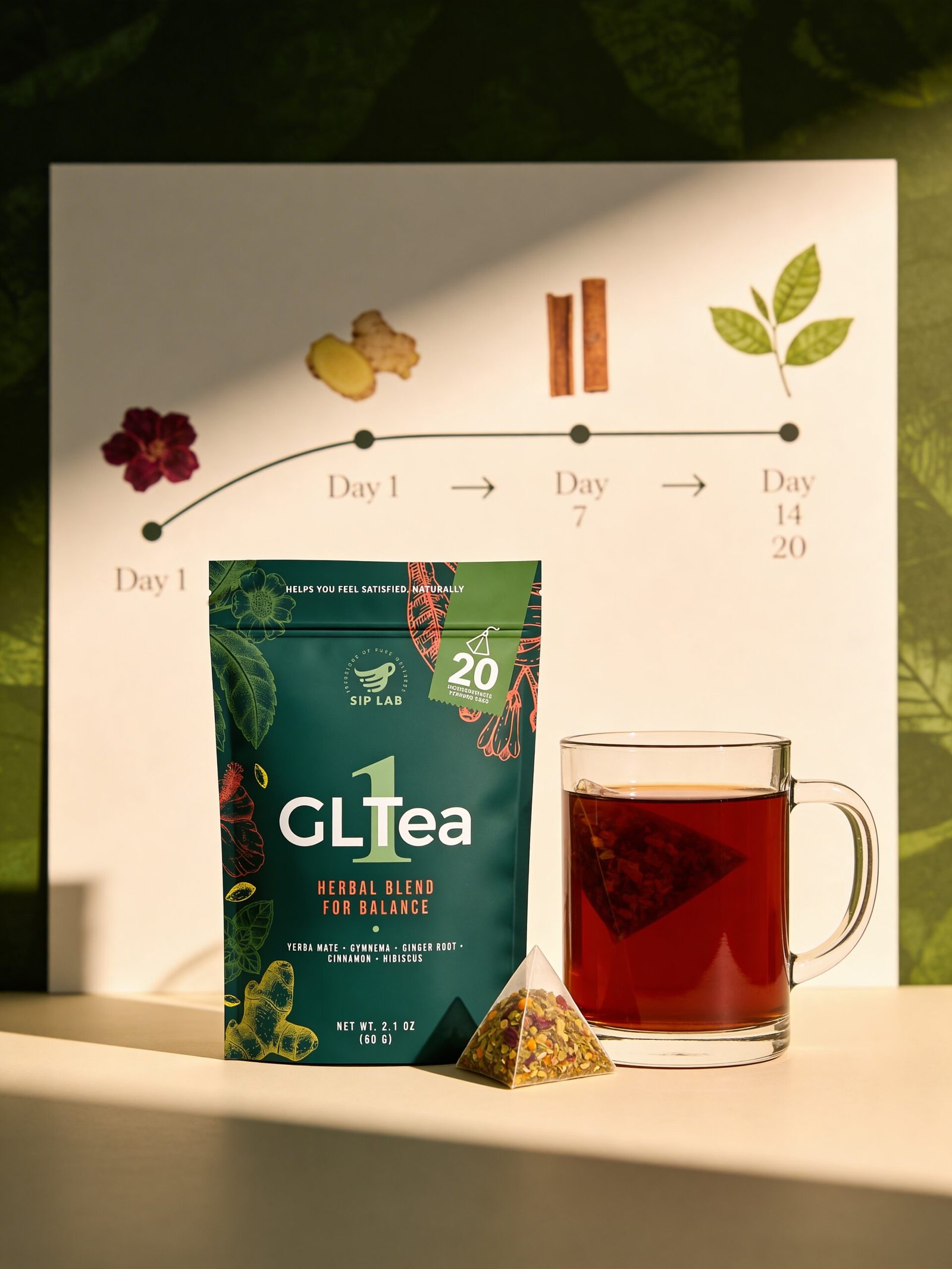
Products like GLTea-1 combine several of these compounds — including yerba mate and green tea — into a single daily tea, which simplifies the approach and costs significantly less than stacking individual supplements.
Gymnema Sylvestre
Gymnema is a valuable metabolic support ingredient, but it is important to be precise about the mechanism: it works primarily through glucose absorption inhibition, not GLP-1 stimulation directly.
- Weight loss in clinical trial — Zuniga et al. (2017) showed significant decreases in body weight (81.3 kg to 77.9 kg, p=0.02) in subjects with metabolic syndrome in a double-blind, placebo-controlled trial (Journal of Medicinal Food)
- Sugar craving reduction — Fletcher et al. (2022) found the gymnema group consumed fewer chocolates than controls in a 14-day study (Nutrients)
- Glucose regulation — Devangan et al. (2021) conducted a meta-analysis of 10 studies confirming significant reductions in fasting and postprandial blood glucose
Curcumin
Curcumin shows strong preclinical evidence for GLP-1 stimulation, but the human results are mixed.
- Preclinical support — Kato et al. (2017) demonstrated significantly increased GLP-1 secretion and improved glucose tolerance in animal models. Tian et al. (2023) showed curcumin amplifies L-cell number to promote GLP-1 secretion (Molecular Nutrition and Food Research)
- Human results disappointing — a study published in Scientific Reports (Nature) found no effect of curcumin on plasma GLP-1 levels during an oral glucose tolerance test
- Bioavailability is a challenge — standard curcumin is poorly absorbed; effective delivery requires piperine or liposomal formulations
Side Effects: A Very Different Profile
This is where natural approaches have their clearest advantage. The side effect comparison is not subtle.
Looking for a functional tea with these ingredients?
GLTea-1 combines yerba mate, gymnema, ginger, cinnamon, and hibiscus in a single daily cup. Learn more or shop on Amazon.
| Category | GLP-1 Drugs | Natural Alternatives |
|---|---|---|
| Gastrointestinal issues | Very common (15-82% of users) | Mild, usually transient (first 1-2 weeks) |
| Muscle loss | Up to 40% of weight lost is lean mass | Not reported |
| Appearance changes | “Ozempic face” and “Ozempic butt” common | Not reported |
| Gastroparesis risk | 66% higher risk vs. non-users | Not associated |
| Drug interactions | Moderate concern | Berberine: significant concern (CYP enzymes) |
| Serious adverse events | Rare but real (pancreatitis, gallbladder) | Very rare at standard doses |
| Discontinuation due to side effects | 4.5-7% in clinical trials | Very low |
GLP-1 Drug Side Effects in Detail
The most common issue is gastrointestinal distress. In a two-year study, 82.2% of semaglutide users experienced mild-to-moderate GI events compared to 53.9% on placebo. Nausea affects 15 to 50% of patients depending on the study and dose.
The muscle loss concern is underappreciated. Up to 40% of weight lost on GLP-1 drugs comes from lean mass, not fat — clinical trials showed roughly 15 pounds of muscle lost during treatment. This raises concerns about sarcopenia and has led to the widely discussed “Ozempic face” — sunken cheeks and sagging skin from rapid volume loss. A 2024 ASDS survey found 58% of dermatologists had treated patients for facial volume restoration after GLP-1 use.
Natural Alternative Side Effects
Natural compounds are not side-effect-free, but the profile is substantially milder. The most important safety note: berberine has significant drug interactions. It affects CYP2D6, CYP3A4, and CYP2C9 enzymes, creating potentially dangerous combinations with blood thinners (warfarin), immunosuppressants (cyclosporine), and diabetes medications (metformin, insulin). If you take any prescription medications, consult your physician before adding berberine.
Yerba mate and green tea carry caffeine-related effects (insomnia, anxiety, increased heart rate) at high doses. Gymnema may lower blood sugar excessively when combined with diabetes medications. These are manageable risks for most healthy adults but worth knowing about.
The Rebound Problem
This may be the most important factor in the long-term comparison, and it receives far too little attention.
The STEP 1 extension study, published in Diabetes, tracked participants after they stopped semaglutide. They had lost an average of 17.3% of body weight over 68 weeks. After stopping, they regained 11.6 percentage points by week 120 — meaning two-thirds of the weight lost came back within one year. The net loss retained was only 5.6% from baseline.
The cardiometabolic improvements (blood pressure, lipids, inflammation markers) also reverted toward baseline after discontinuation.
Real-World Data Is More Nuanced
A Cleveland Clinic study of approximately 8,000 patients found more moderate results: obesity patients lost 8.4% before stopping and regained only 0.5% on average after one year. Among their cohort, 55% gained weight after stopping while 45% either continued losing or maintained. The difference likely reflects that real-world patients had more modest losses and potentially better lifestyle habits than clinical trial participants.
Why This Matters for the Cost Equation
The rebound effect transforms the cost calculation. GLP-1 drugs are not a 68-week treatment — they are designed as indefinite therapy. Stop the drug, lose the benefits. At self-pay prices, that is $4,188 per year for as long as you want the results. Over 20 years, that is $83,760 for medication alone.
Natural approaches do not have this problem. You cannot “withdraw” from drinking tea. The results are more modest, but they are yours to keep.
Who Should Consider Each Approach
GLP-1 drugs make the most sense for:
- BMI of 30 or higher — especially with obesity-related comorbidities (type 2 diabetes, hypertension, sleep apnea)
- Significant weight loss needed — when 15%+ body weight reduction is the clinical goal
- Under physician supervision — with regular monitoring, lab work, and dose management
- Insurance coverage available — making the long-term cost sustainable
Natural approaches make the most sense for:
- Moderate weight management goals — 5 to 15 pounds, or maintaining a healthy weight
- Metabolic health support — improving blood sugar regulation, insulin sensitivity, and gut health
- Post-GLP-1 maintenance — people who have stopped GLP-1 drugs and want to maintain results
- Sustainable, long-term approach — building daily habits rather than depending on medication
- Cost-conscious consumers — especially those without insurance coverage for GLP-1 drugs
- Side effect sensitivity — people who prefer to avoid GI disruption, muscle loss, and appearance changes
Evidence Snapshot
- Xie et al. (2023) — Berberine’s GLP-1 pathway confirmed. Frontiers in Pharmacology
- Zhang et al. (2014) — Berberine increased postprandial GLP-1 levels in humans. BMC Complementary and Alternative Medicine
- Kim et al. (2015) — Yerba mate reduced body fat mass vs. placebo (RCT). BMC Complementary Medicine and Therapies
- Andersen & Fogh (2017) — Yerba mate significantly increased GLP-1 after breakfast. Journal of Functional Foods
- Liu et al. (2014) — EGCG nearly doubled GLP-1 levels (p=0.001) in RCT. PLOS One
- Chen et al. (2016) — High-dose EGCG produced significant weight loss in RCT. Clinical Nutrition
- Zuniga et al. (2017) — Gymnema sylvestre reduced body weight in metabolic syndrome patients. Journal of Medicinal Food
- Fletcher et al. (2022) — Gymnema reduced sugar cravings vs. control. Nutrients
- Kato et al. (2017) — Curcumin stimulated GLP-1 secretion (preclinical). Molecular Nutrition and Food Research
- STEP 1 Extension (2022) — Two-thirds of weight regained within 1 year after stopping semaglutide. Diabetes
- STEP 1 Trial (2021) — Semaglutide produced 14.9% weight loss over 68 weeks. New England Journal of Medicine
Frequently Asked Questions
Can tea really replace Ozempic?
No. No tea, supplement, or natural compound can replicate the weight loss potency of prescription GLP-1 drugs. Semaglutide produces 15-17% body weight loss; individual natural compounds produce 1-4%. What functional teas can do is support your body’s own GLP-1 production, help manage appetite, and contribute to sustainable metabolic health — at a fraction of the cost and without the side effects.
How much weight can I lose with natural GLP-1 support?
Individual natural compounds show 1-4% body weight reduction in clinical studies. Combined natural approaches paired with dietary changes and exercise may reach the 5-8% range, which crosses the threshold physicians consider clinically meaningful. Expect gradual, sustainable results rather than dramatic transformation.
Are natural GLP-1 alternatives safe?
At standard doses, compounds like yerba mate, green tea EGCG, and gymnema sylvestre have strong safety profiles for most healthy adults. Berberine is the exception — it has significant drug interactions and should not be combined with blood thinners, immunosuppressants, or diabetes medications without physician supervision. Always consult a healthcare professional if you take any prescription medications.
How long does it take for natural approaches to work?
Most clinical studies showing benefits ran for 8 to 12 weeks. Unlike GLP-1 drugs, which produce rapid early weight loss, natural approaches work gradually. Expect to notice changes in appetite and energy within 2 to 4 weeks, with measurable body composition changes at 8 to 12 weeks of consistent daily use.
Can I use natural GLP-1 support while on Ozempic?
There is limited research on combining natural GLP-1 supportive compounds with prescription GLP-1 drugs. A 2025 joint advisory from the American College of Lifestyle Medicine and three other organizations recommends prioritizing nutrition — including protein, fiber, and functional foods — to support GLP-1 therapy. However, always discuss any supplements with your prescribing physician before combining them with medication.
What is the best tea for GLP-1 support?
The compounds with the strongest evidence for GLP-1 stimulation are yerba mate and green tea EGCG. Yerba mate has direct human evidence of increased GLP-1 levels (Andersen and Fogh, 2017), and EGCG nearly doubled GLP-1 in a placebo-controlled trial (Liu et al., 2014). A tea that combines both ingredients provides the broadest evidence-backed support.
Bottom Line
GLP-1 drugs are genuinely effective — and genuinely expensive, with real side effects and a well-documented rebound problem. Natural alternatives will not match that potency, but for the majority of people seeking sustainable weight management support, the combination of functional compounds like yerba mate and EGCG with consistent lifestyle habits can produce clinically meaningful results at 1/20th the cost and without the trade-offs. GLTea-1 was built on exactly this principle — honest ingredients, real evidence, no hype.
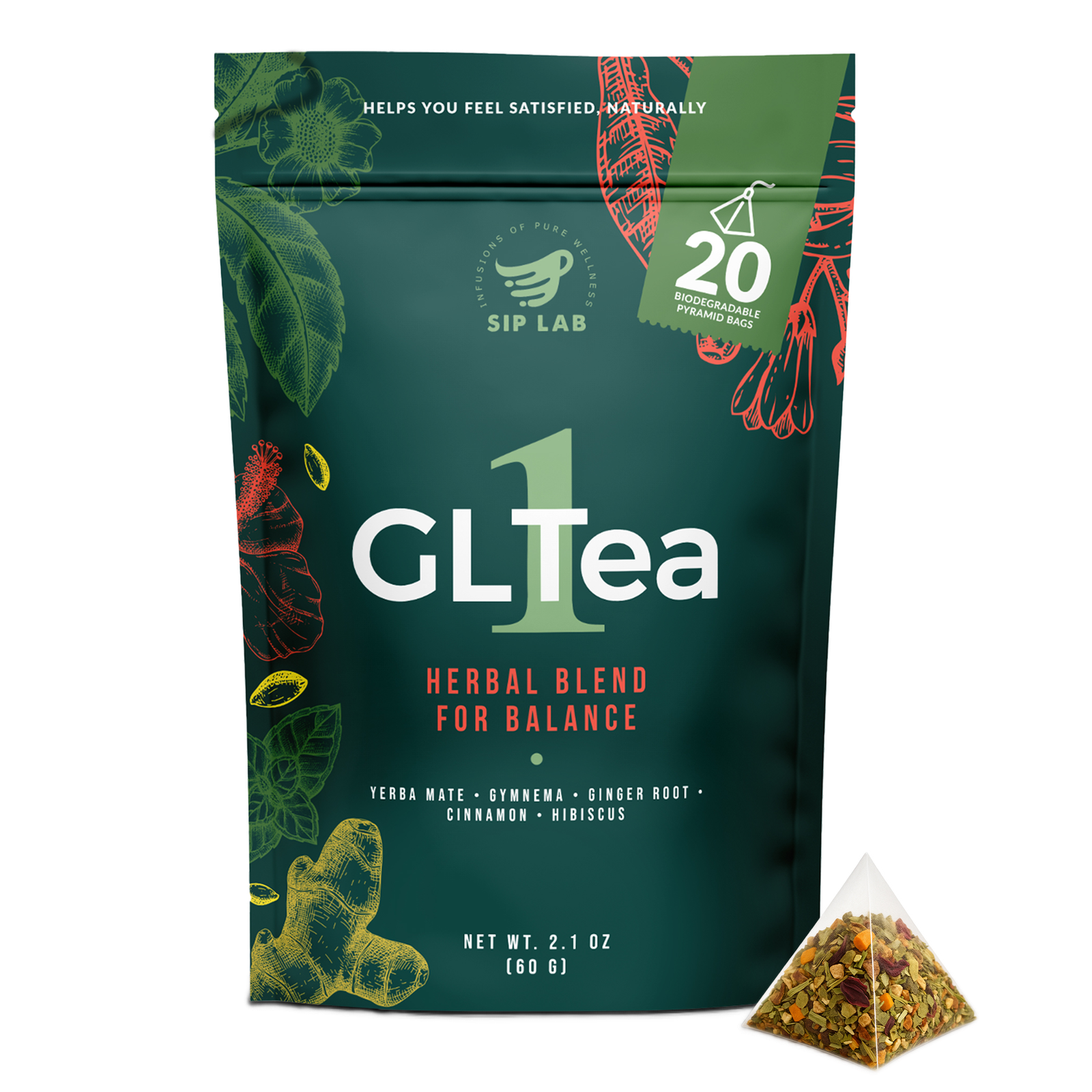
GLTea-1 — Herbal Blend for Balance
Yerba Mate + Gymnema + Ginger Root + Ceylon Cinnamon + Hibiscus
20 biodegradable pyramid bags • $12.99 (on sale) • Under $0.65/cup • No laxatives, no fillers
These statements have not been evaluated by the Food and Drug Administration. This product is not intended to diagnose, treat, cure, or prevent any disease. Always consult with a healthcare professional before starting any supplement regimen, especially if you are taking prescription medications.