GLP-1 receptor agonists like Ozempic and Wegovy have changed the weight loss conversation. At $935–$1,349 per month without insurance, with nausea affecting up to 20% of users and research showing 20–50% of weight lost may come from lean muscle tissue, millions of people are asking the same question: is there a natural way to support GLP-1 production without the prescription?
The honest answer is nuanced. Several natural compounds have demonstrated the ability to stimulate GLP-1 secretion in peer-reviewed research. None of them will match the potency of semaglutide — that needs to be said upfront. But the science behind certain plants, teas, and bioactive compounds is more legitimate than most wellness content would have you believe.
What Is GLP-1 and Why Does It Matter?
GLP-1 (glucagon-like peptide-1) is a hormone your body already produces. It’s secreted by L-cells in the gut after you eat, and it does three things:
- Signals satiety to your brain — telling the hypothalamus you’ve had enough food
- Slows gastric emptying — keeping food in your stomach longer so you feel full
- Stimulates insulin secretion — helping regulate blood sugar after meals
Ozempic (semaglutide) is a synthetic GLP-1 receptor agonist that mimics this hormone at pharmaceutical concentrations. Natural compounds work differently — they support your body’s own GLP-1 production rather than replacing it with a synthetic version. The effect is gentler, but the mechanism is real.
Natural Compounds That Support GLP-1 Production
Berberine: The Most Studied (and Most Overhyped)
Berberine went viral as “Nature’s Ozempic” on social media. Here’s what the research actually shows:
- GLP-1 mechanism confirmed — A study in the Journal of Endocrinology (2009) demonstrated that berberine promotes GLP-1 (7-36) amide secretion, and a comprehensive pathway review in Frontiers in Pharmacology (2023) mapped the specific mechanisms
- Modest weight loss — A 2020 meta-analysis in Clinical Nutrition ESPEN covering 12 randomized controlled trials found berberine reduced body weight by an average of 2.07 kg (about 4.5 lbs) and BMI by 0.47 kg/m²
- Updated safety data — A 2025 meta-analysis in Frontiers in Pharmacology found no significant safety differences versus placebo at standard doses
- The reality check — UCLA Health (October 2025) states plainly: average weight loss with berberine is 2–5 lbs over 12 weeks, compared to 15–17% total body weight with semaglutide over 68 weeks
Berberine is real, but calling it “Nature’s Ozempic” is a stretch. It’s more accurately a mild GLP-1 supporter with meaningful blood sugar benefits.
Yerba Mate: The GLP-1 and Gut Microbiome Connection
This is where the science gets interesting — and where most competitor content stops short.
- Direct GLP-1 elevation in animal models — A study in the Journal of Ethnopharmacology (2012) found that chronic yerba mate administration at 50 and 100 mg/kg for 3 weeks significantly increased GLP-1 levels while reducing food intake and body weight in mice
- The gut microbiome pathway — A 2025 study in Nutrients (MDPI) revealed something most articles miss: yerba mate selectively upregulates GLP-1 without affecting GIP, and the key mechanism involves gut bacteria converting ferulic acid into dihydroferulic acid, which then stimulates GLP-1 production in L-cells
- Human body composition data — A 12-week randomized, double-blind, placebo-controlled trial published in BMC Complementary Medicine and Therapies (2015) found that 3 g/day of yerba mate produced statistically significant decreases in body fat mass, percent body fat, and waist-hip ratio compared to placebo
- Synergy with other compounds — A study in the Journal of Functional Foods (2017) showed that yerba mate combined with guarana and damiana produced significantly higher GLP-1 concentrations at 60 and 150 minutes after a meal
Green Tea (EGCG): The Synergy Angle
Green tea’s catechins — especially EGCG — have a specific GLP-1 connection that becomes more powerful in combination with caffeine:
- GLP-1 secretion in humans — A randomized controlled trial in PLoS ONE (2014) with 77 type 2 diabetes patients found that 500 mg of green tea extract three times daily for 16 weeks produced significant within-group increases in GLP-1 levels
- The EGCG + caffeine combination — Research in the Journal of Functional Foods (2018) found that EGCG and caffeine together inhibit gastric motility by elevating GLP-1 secretion, contributing to both fat accumulation suppression and appetite-suppressing action. The combination outperforms either compound alone
- DPP-4 regulation — A 2022 study in Clinical Nutrition showed green tea extract helps regulate DPP-4, the enzyme that breaks down your body’s natural GLP-1. By inhibiting DPP-4, green tea may help your existing GLP-1 last longer
- Insulin sensitivity boost — A randomized, double-blind crossover trial in Nutrients (2022) found that catechins combined with chlorogenic acids significantly improved postprandial insulin sensitivity and markedly increased GLP-1 secretion
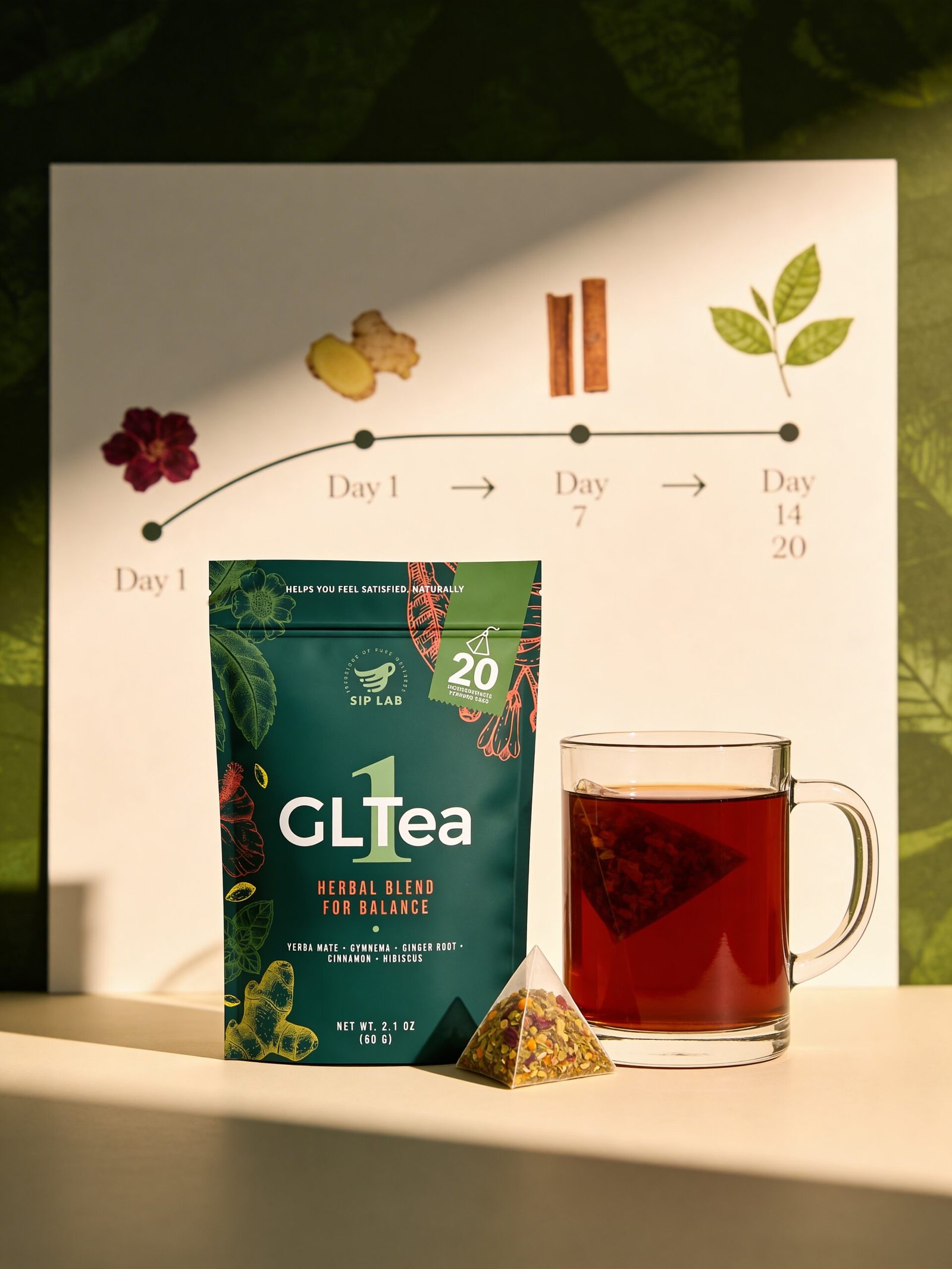
This synergy between EGCG and caffeine is particularly relevant for tea-based approaches like GLTea-1, which combines green tea catechins with yerba mate’s natural caffeine and additional GLP-1-supporting compounds in a single formulation.
Gymnema Sylvestre: The Sugar Blocker
- Blood sugar reduction confirmed — A meta-analysis in Complementary Therapies in Medicine (2021) covering 10 studies and 419 participants found gymnema significantly reduces fasting blood glucose, postprandial blood glucose, and HbA1c
- GLP-1 protective activity — Animal research shows gymnema has significant antihyperglycemic activity with protective activity on GLP-1, possibly through gymnema saponins increasing proglucagon gene activity — the precursor to GLP-1
- Physical sugar craving reduction — A 2022 study in Nutrients found that gymnema significantly reduced intake of high-sugar foods by physically blocking sweet taste receptors on the tongue. Gymnemic acids literally make sugar taste like nothing
Curcumin: The Emerging Player
- Direct GLP-1 stimulation — Research in Molecular Nutrition & Food Research (2017) showed curcumin at 1.5 mg/kg significantly improved glucose tolerance via direct stimulation of GLP-1 secretion
- Dramatic postprandial glucose reduction — A randomized crossover trial in Scientific Reports (Nature, 2018) found 180 mg of curcumin taken before a meal reduced postprandial glucose by 60.6% at 60 minutes (P = 0.0007)
- Gut microbiome mechanism — A 2023 study in Molecular Nutrition & Food Research found curcumin compensates for GLP-1 deficiency through the microbiota-bile acids axis in obese mice
How Natural GLP-1 Support Compares to Ozempic
Transparency matters more than marketing. Here’s the honest comparison:
Looking for a functional tea with these ingredients?
GLTea-1 combines yerba mate, gymnema, ginger, cinnamon, and hibiscus in a single daily cup. Learn more or shop on Amazon.
- Weight loss magnitude — Ozempic: 15–17% of body weight over 68 weeks. Natural compounds: 2–5% with consistent use and lifestyle changes. Not comparable in scale.
- Side effect profile — Ozempic: nausea (20%), vomiting (5–9%), diarrhea (8%), potential muscle mass loss (up to 50% of weight lost). Natural compounds: minimal documented side effects at standard doses.
- Cost — Ozempic: $935–$1,349/month without insurance. Natural compound supplementation through tea or capsules: $15–$60/month.
- Sustainability — About 12% of U.S. adults have tried a GLP-1 drug (RAND, August 2025), but many face the challenge of weight regain after discontinuation. Natural approaches build habits that persist.
- Muscle preservation — A University of Utah study (2025) raised concerns about how Ozempic affects muscle size and strength. Natural GLP-1 support has not shown similar muscle-wasting effects.
Evidence Snapshot
- Berberine — 12 RCTs, average weight loss of 2.07 kg, BMI reduction of 0.47 kg/m² (Clinical Nutrition ESPEN, 2020)
- Yerba mate — 12-week RCT showing significant body fat and waist-hip ratio reduction (BMC Complementary Medicine, 2015); selective GLP-1 upregulation via gut microbiome pathway (Nutrients, 2025)
- Green tea EGCG — GLP-1 elevation confirmed in 77-patient RCT (PLoS ONE, 2014); EGCG + caffeine synergy amplifies effect (Journal of Functional Foods, 2018)
- Gymnema sylvestre — Significant fasting blood glucose reduction across 10 studies, 419 participants (Complementary Therapies in Medicine, 2021); sugar intake reduction via taste receptor blocking (Nutrients, 2022)
- Curcumin — 60.6% postprandial glucose reduction in crossover trial (Scientific Reports, 2018); direct GLP-1 secretion stimulation confirmed (Molecular Nutrition & Food Research, 2017)
Related: GLP-1 Tea: The Complete Guide to Botanical GLP-1 Support
Frequently Asked Questions
Can natural supplements actually replace Ozempic?
No. Natural compounds support your body’s GLP-1 production but do not match the potency of pharmaceutical GLP-1 receptor agonists. Semaglutide produces 15–17% body weight loss over 68 weeks — no natural compound comes close to that. However, for people who don’t qualify for or can’t tolerate prescription GLP-1 drugs, natural support offers a meaningful, lower-risk option.
What is the best natural GLP-1 booster?
Based on current evidence, no single compound stands out as definitively “best.” Berberine has the most clinical data for blood sugar regulation. Yerba mate has the most interesting GLP-1-specific mechanism via the gut microbiome. EGCG from green tea shows the strongest synergy with caffeine. The research suggests combinations may be more effective than any single ingredient.
How long does it take for natural GLP-1 support to work?
Most studies showing measurable effects run 8–16 weeks. The yerba mate body composition trial showed significant results at 12 weeks. Berberine meta-analyses typically cover 12-week studies. Consistency matters more than any single compound — daily use over months is what the evidence supports.
Is berberine really “Nature’s Ozempic”?
It’s a catchy label that oversells the data. Berberine does stimulate GLP-1 secretion and produces modest weight loss (averaging about 4.5 lbs in clinical trials). But comparing a 4.5 lb loss to Ozempic’s 30+ lb average loss is misleading. Berberine is better described as a natural blood sugar regulator with mild GLP-1-supporting activity.
Are there side effects from natural GLP-1 supplements?
Side effects are generally mild. Berberine can cause GI discomfort at high doses (above 1,500 mg/day). Yerba mate contains caffeine, so excessive consumption may cause jitteriness or sleep disruption. Gymnema may lower blood sugar too much in people already taking diabetes medication. A 2025 meta-analysis in Frontiers in Pharmacology found no significant safety differences between berberine and placebo at standard doses.
Can I use natural GLP-1 support alongside Ozempic?
Consult your prescribing physician before combining any supplement with GLP-1 medications. Some compounds (particularly berberine and gymnema) affect blood sugar and could interact with diabetes drugs. There is no published research on combining these natural compounds with semaglutide specifically.
Does green tea actually increase GLP-1?
Yes, with caveats. A 16-week RCT showed significant within-group GLP-1 increases with green tea extract, though between-group differences versus placebo were not statistically significant on the primary outcome. The EGCG + caffeine combination appears more effective than EGCG alone, and green tea’s DPP-4 inhibiting properties help preserve existing GLP-1 from being broken down.
The Bottom Line
Natural GLP-1 support is real but modest. The compounds with the strongest evidence — berberine, yerba mate, green tea EGCG, gymnema, and curcumin — work through legitimate biological mechanisms that have been validated in peer-reviewed research. They won’t replace Ozempic, and anyone claiming otherwise is selling something. But for the millions of people looking for a safe, affordable, sustainable way to support appetite regulation and metabolic health, the science says these compounds are worth considering — especially in combination.
GLTea-1 was formulated around this research, combining yerba mate, green tea, gymnema, and berberine into a daily tea designed to support natural GLP-1 production. It’s not a drug. It’s not a miracle. It’s a science-backed functional tea that works with your body’s existing systems — and that’s exactly the point.
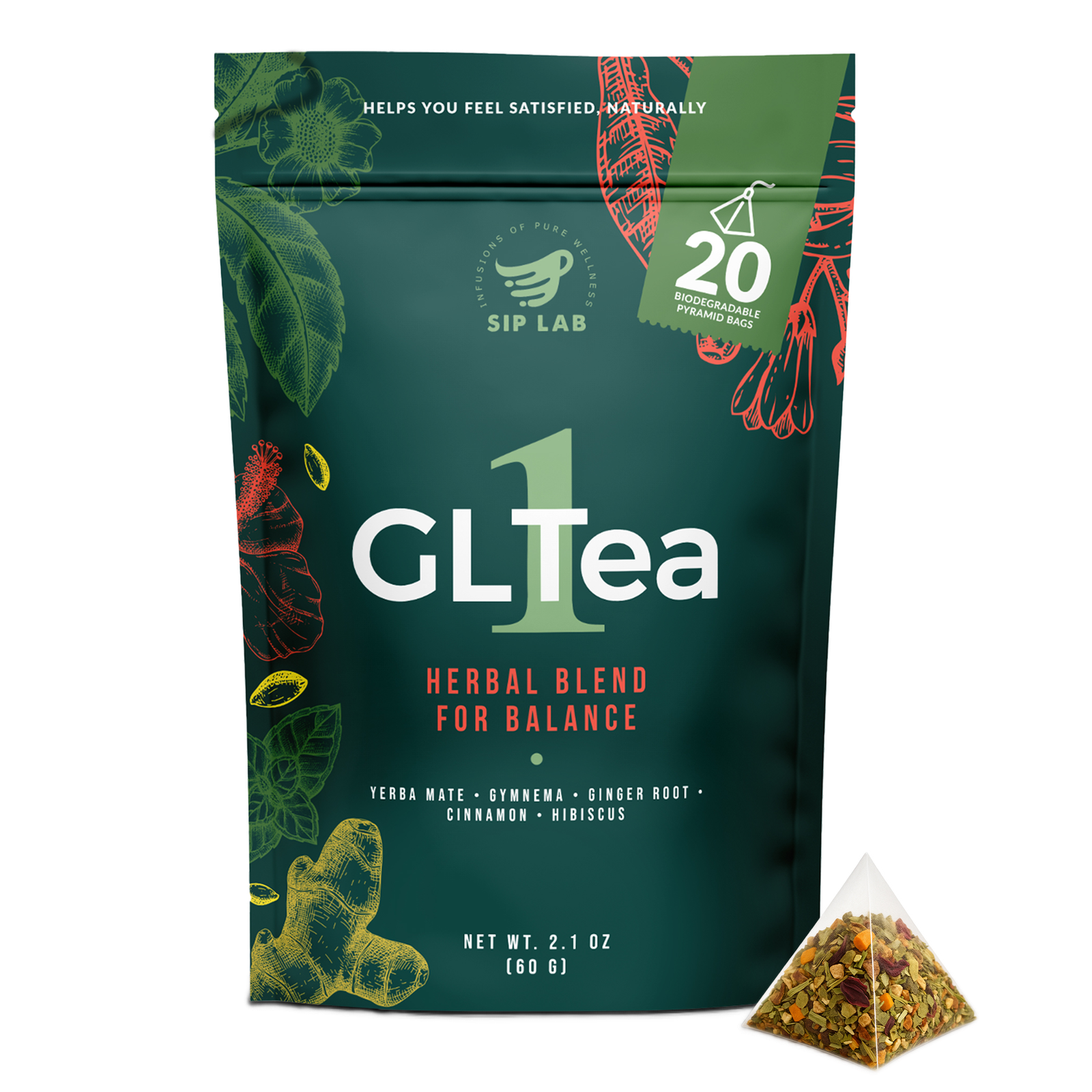
GLTea-1 — Herbal Blend for Balance
Yerba Mate + Gymnema + Ginger Root + Ceylon Cinnamon + Hibiscus
20 biodegradable pyramid bags • $12.99 (on sale) • Under $0.65/cup • No laxatives, no fillers
*These statements have not been evaluated by the Food and Drug Administration. This product is not intended to diagnose, treat, cure, or prevent any disease.