Peppermint tea won’t melt fat, fix your sleep, or detox anything. What it does have is a focused, well-documented effect on digestive symptoms — and a much smaller body of evidence for everything else it gets credited with on wellness blogs. This is what 50 years of research actually says, with the limitations stated up front.
One distinction matters before anything else: most published peppermint research is on enteric-coated peppermint oil capsules, not steeped peppermint tea. Tea contains a much smaller dose of the active compound (menthol) and the dose is variable. Where the research applies to tea, we’ll say so. Where it doesn’t, we’ll say that too.
What’s Actually in Peppermint Tea
Peppermint (Mentha × piperita) leaves contain a mix of volatile oils, the most important of which is menthol. Brewed peppermint tea delivers a small fraction of the menthol you’d get from an oil capsule — but it also delivers other constituents that may matter:
- Menthol: The primary active compound. Smooth-muscle relaxant in the GI tract.
- Menthone, limonene, and 1,8-cineole: Smaller volatile oil fractions, also bioactive.
- Rosmarinic acid and other polyphenols: Antioxidant compounds present in the water-soluble fraction (i.e., they end up in your tea).
- Flavonoids (luteolin, eriocitrin): Documented antioxidant and mild anti-inflammatory activity.
Net effect of tea vs. oil capsules: tea is a milder, broader-spectrum delivery of the plant’s compounds. Capsules are a concentrated, targeted dose of menthol. The two are not interchangeable in the research.
The Strongest Evidence: Digestion
This is where peppermint actually earns its reputation. The evidence for peppermint and digestive symptoms is the most robust of any claim, and it spans three categories.
Irritable Bowel Syndrome (IBS)
A 2019 meta-analysis in the Journal of Clinical Gastroenterology (Alammar et al.) pooled 12 randomized controlled trials, n=835, and found that enteric-coated peppermint oil capsules were significantly more effective than placebo at reducing global IBS symptoms (RR 2.39 for symptom relief). The mechanism is well-understood: menthol blocks calcium channels in intestinal smooth muscle, reducing spasm.
Tea caveat: The doses studied are 180-225 mg of peppermint oil per dose, two to three times daily. A cup of peppermint tea delivers a small and variable fraction of this. The clinical effect on IBS is well-supported for capsules, weakly supported for tea. People with diagnosed IBS should not assume tea will substitute for oil capsules.
Functional Dyspepsia (Indigestion)
A 2018 BMJ Evidence-Based Medicine review and a 2017 randomized trial in the Journal of Gastroenterology (Chey et al.) found that peppermint oil combined with caraway oil produced statistically significant improvements in upper-GI symptoms — bloating, fullness, post-meal discomfort — compared to placebo. The combination is the active part of the German over-the-counter remedy STW-5.
Tea note: For mild post-meal indigestion, a cup of peppermint tea after a heavy meal has cultural and folk support, plausible mechanism (smooth-muscle relaxation in the upper GI), and minimal downside. The effect size for tea specifically is not well-quantified.
Nausea
The evidence here is mixed and small. A 2014 study in Complementary Therapies in Medicine (Pasha et al.) suggested aromatherapy with peppermint oil reduced post-operative nausea, but the trials are small and the inhalation pathway is different from drinking the tea. Drinking peppermint tea for general nausea has folk support but limited controlled-trial evidence.
The Reflux Exception (Important)
Peppermint relaxes smooth muscle. That’s helpful for IBS, where intestinal spasm is the problem. It is not helpful for gastroesophageal reflux disease (GERD), where relaxation of the lower esophageal sphincter is the problem. Multiple gastroenterology guidelines list peppermint as a reflux trigger to avoid.
Bottom line: If you have GERD or frequent heartburn, peppermint tea may make symptoms worse, not better. This is not a contradiction in the research — it’s the same mechanism producing opposite effects in opposite parts of the GI tract.
What About Headaches?
The headache research on peppermint is essentially all topical (10% peppermint oil applied to the forehead and temples), not oral or tea-based. The most-cited study (Göbel et al., Cephalalgia, 1996) showed a tension-headache reduction comparable to acetaminophen — but with the oil applied externally.
Tea evidence for headache: weak. Drinking peppermint tea is unlikely to deliver enough menthol to replicate the topical effect. The cultural use is real; the controlled-trial support is not.
Peppermint Tea and Weight Loss
This is where most wellness content goes off the rails. Peppermint tea is repeatedly listed in “best teas for weight loss” articles. The actual evidence is thin.
- No direct fat-burning mechanism. Peppermint does not contain catechins, caffeine in meaningful amounts, or any other compound with documented thermogenic effects on the scale of green tea or matcha.
- Possible appetite-modulation pathway. A small 2008 study (Raudenbush et al.) suggested peppermint scent reduced appetite ratings — but the effect was small, the sample was tiny (n=40), and the mechanism is olfactory, not nutritional.
- Calorie displacement. Peppermint tea is essentially calorie-free. If it replaces a sweetened beverage, the weight effect comes from the calorie reduction, not from peppermint itself.
If you’re looking for a tea with a real, mechanism-backed connection to metabolic health, the evidence is much stronger for green tea and matcha (catechins, modest fat oxidation), ginger (thermogenesis), and yerba mate (GLP-1 secretion support). Peppermint’s contribution to weight management — if any — is incidental.
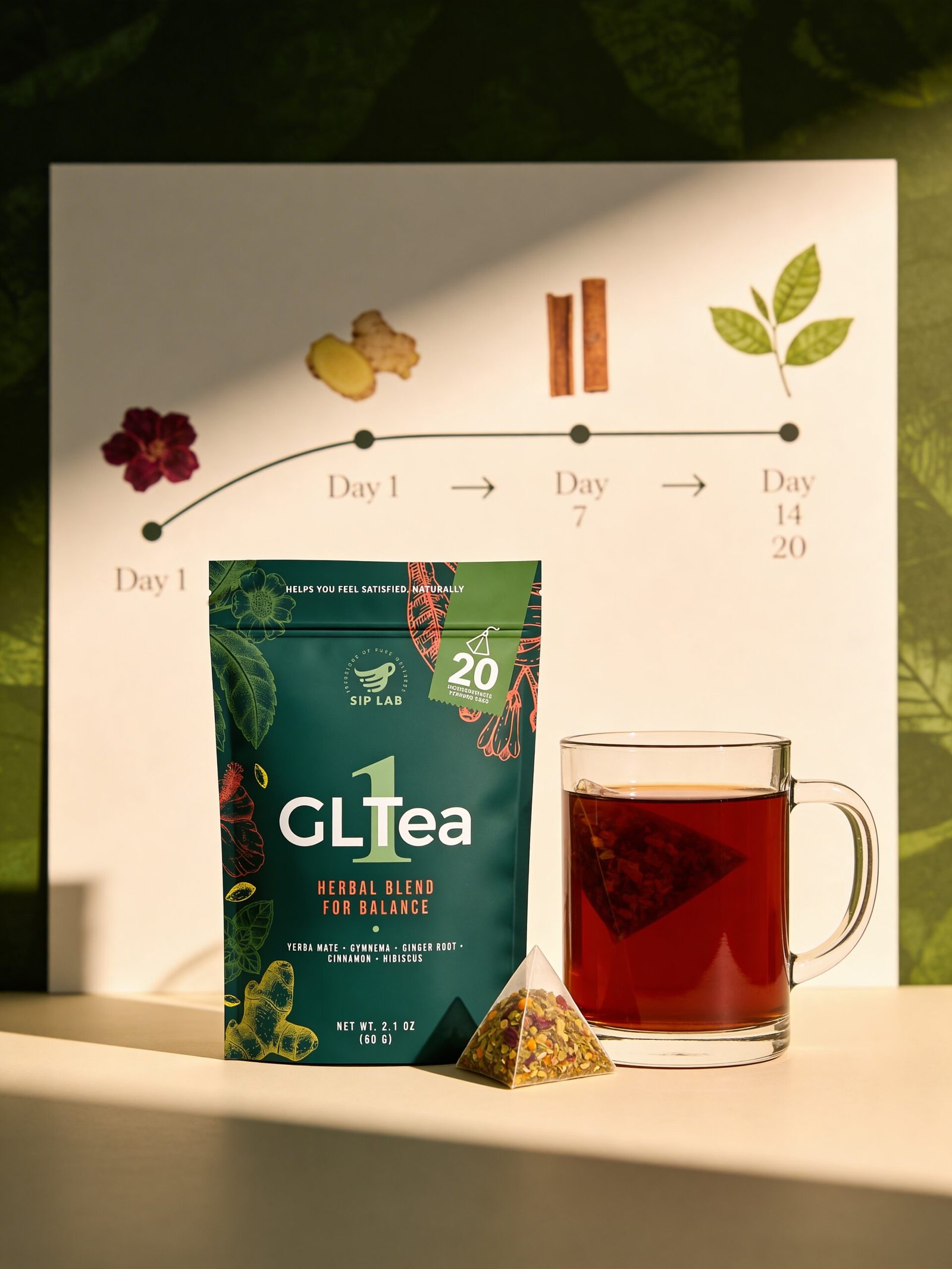
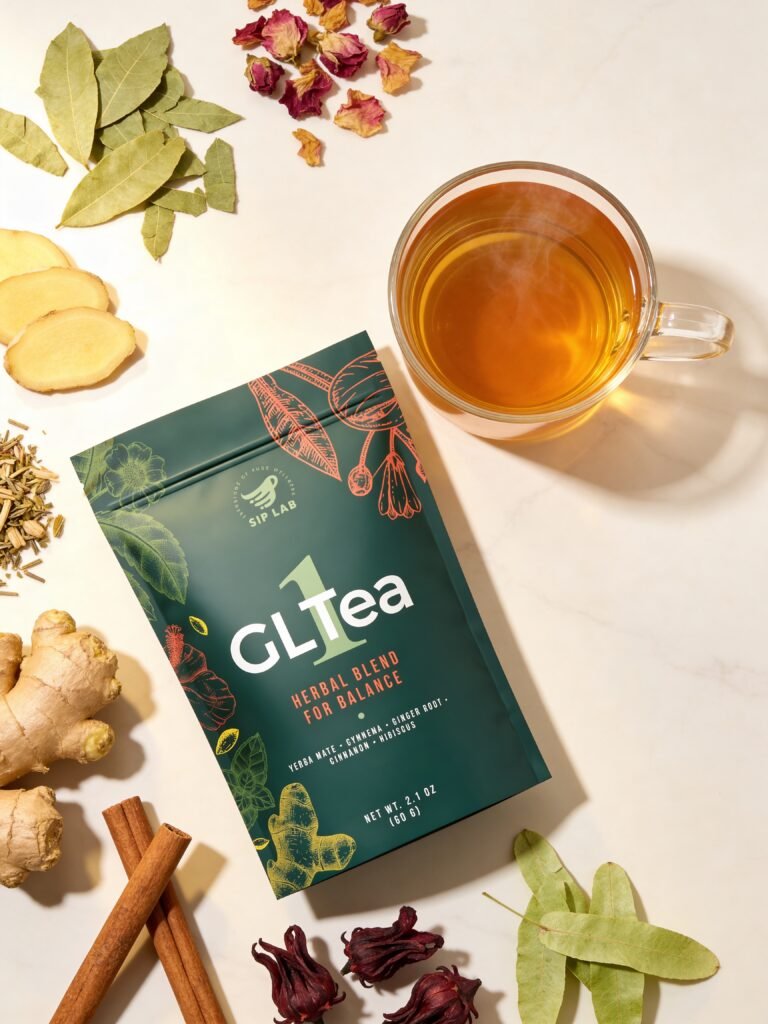
Our own functional tea, GLTea-1, is built around five ingredients with published evidence for metabolic and appetite pathways: yerba mate, gymnema, ginger, cinnamon, and hibiscus. Peppermint isn’t in the formula because the research doesn’t support it being there. That’s the same standard we’d apply to any other ingredient.
Peppermint Tea vs. Detox Teas
Peppermint tea is sometimes lumped together with “detox teas” or “skinny teas.” It shouldn’t be. Most commercial detox teas list senna leaf as a primary ingredient — senna is an FDA-classified stimulant laxative. The “weight loss” produced is water and stool weight, not fat. Senna also has documented dependence and electrolyte-imbalance risks with chronic use.
Peppermint tea contains no laxatives, no stimulants, and no detox actives. It is a low-risk, mild-effect digestive tea. The category confusion is a marketing problem, not a science problem.
Side Effects and Who Should Avoid It
- GERD/reflux: Avoid. May worsen symptoms via lower-esophageal-sphincter relaxation.
- Hiatal hernia: Same mechanism, similar caution.
- Pregnancy: Generally considered safe in moderate amounts (1-2 cups/day). Concentrated peppermint oil should be avoided.
- Iron absorption: Like many herbal teas, peppermint may modestly reduce non-heme iron absorption when consumed with meals. Drink between meals if you’re managing iron intake.
- Drug interactions: Peppermint oil capsules can theoretically interact with cyclosporine and certain blood-pressure medications (CYP3A4 pathway). The risk from tea is much lower but worth flagging if you’re on multiple medications.
How to Actually Use Peppermint Tea
- For mild post-meal indigestion: One cup of peppermint tea, 15-30 minutes after a heavy meal. Steep 5-7 minutes for a meaningful menthol extraction.
- For diagnosed IBS: Talk to a gastroenterologist about enteric-coated peppermint oil capsules. Tea alone is unlikely to be enough.
- For evening relaxation: Peppermint is caffeine-free. It’s a reasonable swap for caffeinated teas late in the day, though the sedative evidence is much weaker than for chamomile.
- What to skip: Don’t expect peppermint tea to cause meaningful weight loss, “detox” anything, or replace medication for diagnosed conditions.
Evidence Snapshot
- Alammar et al., 2019 — Journal of Clinical Gastroenterology. Meta-analysis of 12 RCTs (n=835). Peppermint oil capsules vs. placebo for IBS. RR 2.39 for symptom relief.
- Chey et al., 2017 — Journal of Gastroenterology. Caraway and peppermint oil combination reduced functional dyspepsia symptoms vs. placebo.
- Göbel et al., 1996 — Cephalalgia. Topical 10% peppermint oil for tension-type headache, comparable to acetaminophen. Topical, not oral.
- Pasha et al., 2014 — Complementary Therapies in Medicine. Peppermint aromatherapy and post-operative nausea. Small study, mixed conclusions.
- Raudenbush et al., 2008 — Peppermint scent and appetite ratings. Small n, olfactory mechanism.
Frequently Asked Questions
Does peppermint tea help you lose weight?
There is no direct fat-burning evidence for peppermint tea. It contains no catechins, no meaningful caffeine, and no documented thermogenic compounds. The only plausible weight-related pathway is calorie displacement (replacing a sweetened beverage with a zero-calorie one) and a small olfactory appetite effect from a single 2008 study. For mechanism-backed metabolic teas, the evidence is much stronger for green tea, matcha, ginger, and yerba mate.
Is peppermint tea good for digestion?
Yes — for some digestive symptoms. Peppermint relaxes smooth muscle in the GI tract, which is helpful for cramping, bloating, and post-meal discomfort. The strongest evidence is for IBS (using enteric-coated peppermint oil capsules, not tea) and functional dyspepsia. Peppermint is not appropriate for GERD or reflux — the same muscle-relaxing effect can worsen those conditions.
How much peppermint tea per day is safe?
For most adults, 1-3 cups per day is generally considered safe and unlikely to produce side effects. The exceptions are people with GERD, hiatal hernia, or who are managing iron absorption, who should drink less or avoid peppermint tea. People taking peppermint oil capsules in addition to drinking tea should follow the capsule guidance, not the tea guidance.
Is peppermint tea better than chamomile?
They serve different purposes. Peppermint has stronger evidence for digestive symptoms (especially IBS-type cramping). Chamomile has stronger evidence for sleep, anxiety, and possibly cortisol modulation. Neither is a weight-loss tea in any meaningful clinical sense. Pick by the symptom, not by the marketing.
Can peppermint tea help with bloating?
Yes, for some people. The smooth-muscle-relaxant mechanism that helps with IBS-type cramping is also the mechanism most likely to relieve gas-related bloating. The effect from drinking tea is milder than from peppermint oil capsules. If bloating is a frequent and severe issue, the underlying cause should be evaluated by a clinician — peppermint tea is a symptom-level tool, not a diagnostic one.
Does peppermint tea have caffeine?
No. Peppermint tea is naturally caffeine-free, which makes it a reasonable evening or late-day option for people sensitive to caffeine. This also means it does not have the metabolic or fat-oxidation effects associated with caffeinated teas like green tea, matcha, or oolong.
The Bottom Line
Peppermint tea is a real digestive tool with focused, well-documented effects on cramping, bloating, and post-meal discomfort. Most of the strongest evidence is for peppermint oil capsules, not tea — the dose difference matters. Peppermint is not a weight-loss tea, not a detox tea, and is actively the wrong choice for reflux. Used for the right reason, in the right amount, it is one of the safest and most useful herbal teas available. Used for the wrong reason, it is overhyped — and that is the part of the wellness-content cycle we’d rather end.
If you’re looking at functional teas through a research-first lens — what each ingredient actually does, what the evidence supports, and what’s been overclaimed — that’s the same standard we apply to GLTea-1. Five ingredients, published evidence for each, no proprietary blends, no laxatives, no claims the research doesn’t support.
This article is for educational purposes only and is not intended as medical advice. The statements above have not been evaluated by the FDA. Talk to your doctor before adding peppermint or any herbal product to your routine if you have a medical condition or take prescription medication.