If you’ve been following wellness trends in 2026, you know GLP-1 medications like Ozempic, Wegovy, and Mounjaro are everywhere. Celebrities endorse them. Doctors prescribe them. And millions of people are seeing dramatic weight loss results.
But there’s a problem: Not everyone wants—or needs—a pharmaceutical intervention. The cost (often $1,000+/month without insurance), side effects (nausea, vomiting, gastroparesis), and long-term unknowns have many asking: Are there natural alternatives to Ozempic that work through similar pathways?
The answer is nuanced but hopeful. While no botanical can replicate the potency of a GLP-1 agonist drug, certain plants DO support the same biological pathways that make these medications effective—just through gentler, sustained mechanisms.
This article explores the science behind natural GLP-1 support, what actually works, what doesn’t, and how to use botanicals strategically for appetite control.

What Is GLP-1 and Why Does It Matter for Weight Management?

GLP-1 (glucagon-like peptide-1) is a hormone your body naturally produces in the gut in response to food intake. It’s part of your body’s elegant feedback system for regulating hunger and energy balance.
GLP-1 does three critical things:
- Signals fullness to your brain (satiety) – Tells your hypothalamus you’ve had enough to eat
- Slows gastric emptying (mechanical fullness) – Food stays in your stomach longer, creating physical satiety
- Regulates blood sugar (metabolic balance) – Improves insulin sensitivity and reduces glucose spikes
When GLP-1 levels are high, you feel satisfied with less food. Hunger is quiet. Cravings diminish. When GLP-1 levels are low—which happens with insulin resistance, obesity, and poor diet—hunger dominates and cravings intensify.
Ozempic, Wegovy, and Mounjaro are GLP-1 receptor agonists—meaning they mimic this hormone, amplifying its effects far beyond what your body produces naturally. The result? Dramatic appetite suppression and significant weight loss (typically 15-20% of body weight in clinical trials).
But here’s the key insight: Your body ALREADY makes GLP-1. The question isn’t whether you can get it—you already have it. The question is: How can you naturally support and optimize your body’s own GLP-1 production?
Can Natural Compounds Actually Support GLP-1 Pathways?
The short answer: Yes, but not in the same way drugs do—and that’s actually a good thing.
Pharmaceutical GLP-1 agonists flood your system with synthetic hormone mimics at supraphysiological doses. It’s like turning a dial to maximum. Effective? Absolutely. Sustainable long-term? We’re still learning.
Natural approaches work differently. They:
- Stimulate your body’s own GLP-1 production (upregulation, not replacement)
- Reduce GLP-1 degradation (keeping it active longer in your system)
- Support the metabolic pathways that amplify GLP-1’s effects (insulin sensitivity, blood sugar balance)
Think of it this way: Drugs are a firehose. Botanicals are strategic irrigation. One overwhelms the system with force. The other works with your body’s existing infrastructure to optimize function.

The 5 Best Natural Alternatives to Ozempic (Backed by Research)
1. Yerba Mate – Direct GLP-1 Stimulation

Why it works:
Yerba mate contains bioactive compounds—particularly saponins and chlorogenic acid—that have been shown to directly increase GLP-1 secretion in the intestinal L-cells (the cells that produce GLP-1 naturally).
The research:
A 2015 double-blind study published in Nutrients found that yerba mate extract significantly increased circulating GLP-1 levels and reduced subjective appetite ratings in overweight adults. The effect was dose-dependent and sustained over 12 weeks of daily consumption.
Another study in Journal of Ethnopharmacology (2013) demonstrated that yerba mate delayed gastric emptying—mimicking one of GLP-1’s primary mechanisms—without causing digestive discomfort.
How to use: Brew 1-2 cups daily, ideally 30 minutes before your largest meals to maximize appetite-suppressing effects.
2. Gymnema Sylvestre – The “Sugar Destroyer”

Why it works:
While Gymnema doesn’t directly stimulate GLP-1, it mimics one of its most important downstream effects: reducing glucose spikes that trigger hunger rebounds. Gymnemic acids block sugar receptors on your tongue AND in your intestines, reducing both the taste appeal and absorption of sugar.
The research:
Studies show Gymnema can reduce sugar absorption by up to 50% when taken with meals. A 2010 study in Physiology & Behavior found that Gymnema extract significantly reduced sweet cravings and overall caloric intake in participants over 8 weeks.
Most remarkably, when you chew Gymnema leaves or drink the tea, sugar literally tastes bland or unappetizing for 1-2 hours. This breaks the psychological reward cycle that drives sugar overconsumption.
How to use: Brew as tea 30-60 minutes before meals, or take 400mg extract daily. For acute sugar cravings, drink immediately when the urge hits.
3. Berberine – The “Herbal Metformin”

Why it works:
Berberine activates AMPK (AMP-activated protein kinase)—the same metabolic pathway targeted by metformin and influenced by GLP-1. This improves insulin sensitivity, reduces glucose production in the liver, and enhances fat oxidation.
The research:
A comprehensive meta-analysis in Evidence-Based Complementary and Alternative Medicine (2015) found berberine as effective as metformin for blood sugar management, with the added benefit of modest weight loss (average 5 pounds over 12 weeks) and improved lipid profiles.
Multiple studies confirm berberine’s ability to reduce HbA1c, fasting glucose, and post-meal glucose spikes—all of which indirectly support better appetite control.
How to use: 500mg taken 2-3 times daily with meals. Start with lower doses to assess tolerance (some people experience mild digestive effects initially).
4. Fenugreek – Mechanical Satiety Through Fiber

Why it works:
Fenugreek seeds contain high concentrations of galactomannan—a soluble fiber that forms a viscous gel in the stomach. This physically slows gastric emptying, exactly like GLP-1 does through hormonal signaling.
The research:
A 2009 study in Phytotherapy Research showed that fenugreek fiber supplementation reduced caloric intake by an average of 17% and significantly improved satiety scores in overweight adults—without any reported side effects.
How to use: Take 1-2 grams with meals, or brew fenugreek tea 30 minutes before eating. The fiber needs liquid to form its gel-like structure, so always consume with adequate water.
5. Ceylon Cinnamon – Blood Sugar Stabilizer

Why it works:
Ceylon cinnamon (the “true” cinnamon, not Cassia) improves insulin sensitivity and glucose uptake by cells—preventing the blood sugar crashes that suppress GLP-1 and trigger intense hunger surges.
The research:
Multiple systematic reviews confirm cinnamon’s ability to lower fasting blood glucose (by 10-29% in some studies) and improve insulin response. The mechanism involves increased insulin receptor sensitivity and enhanced glucose transporter expression.
How to use: 1-3 grams daily in tea, smoothies, or food. Always choose Ceylon over Cassia—Cassia contains high levels of coumarin, which can stress the liver with long-term use.
What About “GLP-1 Tea”? Does It Actually Work?
“GLP-1 tea” has become a popular search term as people look for natural alternatives to Ozempic. But what does it actually mean?
Legitimate GLP-1 teas are botanical blends designed to:
- Stimulate natural GLP-1 production (Yerba Mate, green tea)
- Reduce sugar cravings (Gymnema)
- Stabilize blood sugar (cinnamon, ginger)
- Slow gastric emptying (fiber-rich herbs)
- Support metabolic health (berberine, chromium)
These aren’t drugs and don’t contain synthetic hormones. They’re strategic combinations of research-backed botanicals that work synergistically to support your body’s natural appetite regulation.
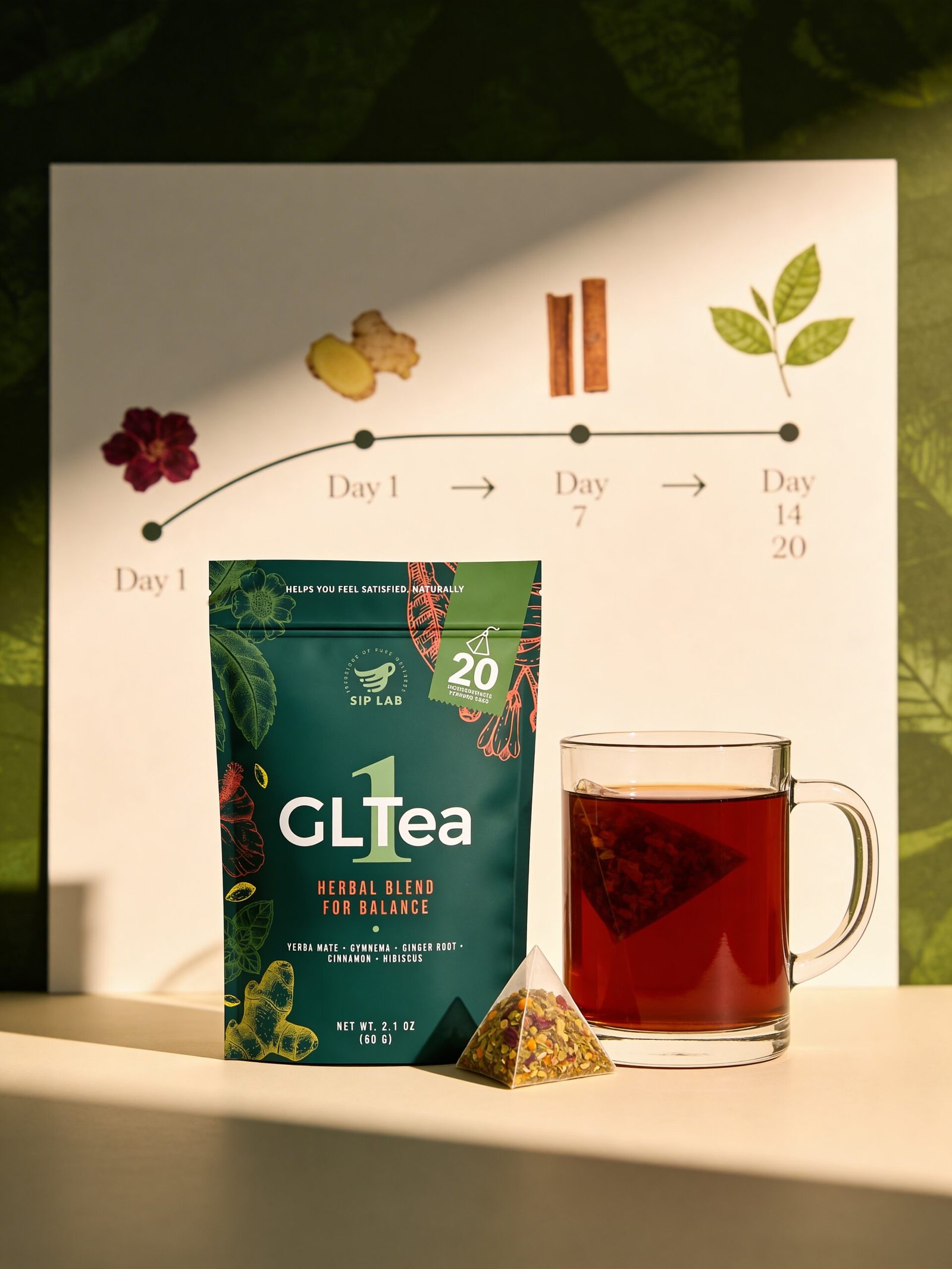
GLTea-1 was formulated specifically with this approach: 8 botanicals selected for their complementary roles in GLP-1 pathway support, appetite regulation, and metabolic health.
It’s not Ozempic. It’s not trying to be. It’s a botanical strategy for people who want to support their body’s natural hunger regulation—without injections, without prescription costs, and without pharmaceutical side effects.
Natural vs. Pharmaceutical: The Honest Comparison

Let’s be completely transparent: Natural alternatives are NOT as potent as GLP-1 drugs. Not even close.
Ozempic can lead to 15-20% body weight loss in clinical trials. Botanical approaches might support 3-7% weight loss over 6 months when combined with lifestyle changes—and that’s with consistent, strategic use.
But natural approaches offer distinct advantages:
- ✅ No injections required – Oral consumption, no needles
- ✅ Lower risk of serious side effects – No nausea, vomiting, or gastroparesis in most cases
- ✅ Support long-term metabolic health – Not just symptom suppression, but root cause support
- ✅ Sustainable and affordable – $20-40/month vs. $1,000+/month
- ✅ No prescription needed – Direct access without insurance battles
- ✅ Can be stopped anytime – No rebound weight gain when discontinued properly
The key is managing expectations. Natural doesn’t mean “miracle.” It means working with your body’s existing systems to optimize function over time.
Who Should Consider Natural Alternatives vs. Medications?

Natural GLP-1 support is best for:
- People with mild to moderate appetite control issues (not severe obesity requiring medical intervention)
- Those not currently eligible for GLP-1 medications (BMI under 30 without comorbidities)
- Individuals seeking a preventive, sustainable approach to weight management
- Anyone wanting to support metabolic health long-term without pharmaceutical dependence
- People who’ve tried GLP-1 drugs and want to transition to a maintenance approach
GLP-1 medications are more appropriate for:
- Individuals with BMI over 30 (or 27+ with weight-related comorbidities like diabetes or hypertension)
- People with type 2 diabetes requiring medical management beyond lifestyle alone
- Those who have tried diet and exercise interventions without significant success
- Anyone under medical supervision for obesity-related health complications
Important: Always consult your doctor before starting OR stopping any medication. Never discontinue prescribed GLP-1 drugs without medical supervision.
How to Maximize Natural GLP-1 Support

Botanicals work best when combined with lifestyle strategies that also support GLP-1 production and function:
- Prioritize protein at every meal – Protein is the most satiating macronutrient and stimulates GLP-1 release naturally. Aim for 25-30g per meal.
- Eat fiber-rich whole foods – Soluble fiber slows digestion and increases GLP-1 secretion. Target 30-40g daily from vegetables, legumes, and whole grains.
- Practice time-restricted eating – Intermittent fasting (even a 12-hour overnight fast) enhances insulin sensitivity and may increase GLP-1 receptor expression.
- Get 7-9 hours of quality sleep – Sleep deprivation suppresses GLP-1 and increases ghrelin (hunger hormone). Non-negotiable for appetite control.
- Manage chronic stress – Cortisol interferes with GLP-1 signaling and drives emotional eating. Meditation, exercise, and therapy all help.
- Stay consistently hydrated – Thirst often mimics hunger. Drinking water before meals enhances satiety and may support GLP-1 function.
- Exercise regularly (especially strength training) – Muscle tissue improves insulin sensitivity, which amplifies GLP-1’s metabolic effects.
The Bottom Line on Natural Ozempic Alternatives
While no botanical can match the dramatic potency of pharmaceutical GLP-1 agonists, natural compounds CAN meaningfully support the same biological pathways through gentler, more sustainable mechanisms.
The best approach combines:
- ✅ Research-backed botanicals (Yerba Mate, Gymnema, Berberine, Fenugreek, Ceylon Cinnamon)
- ✅ Lifestyle optimization (protein, fiber, sleep, stress management, exercise)
- ✅ Realistic expectations (3-7% weight support over 6 months, not 15-20%)
- ✅ Consistency over intensity (daily use for 8-12 weeks minimum to see effects)
If you’re looking for a botanical tea formulated specifically to support GLP-1 pathways and natural appetite regulation, GLTea-1 combines all of these evidence-based ingredients in a convenient, daily-use format.
It’s not a replacement for medication when medication is needed—but it IS a science-backed tool for natural satiety support when you want to work with your body, not override it.
Related Reading
Continue learning about natural appetite management:
- 📖 Best Tea for Appetite Control in 2026 – Compare 12 different teas and discover which ones actually work for hunger management based on clinical research
- 📖 How to Stop Sugar Cravings Naturally – 7 evidence-based strategies including Gymnema (the “sugar destroyer”) and blood sugar optimization techniques
- 🍵 Try GLTea-1 – 8 botanicals formulated to support natural GLP-1 pathways, satiety, and craving control
🍵 Ready to Try Natural GLP-1 Support?
GLTea-1 combines Yerba Mate, Gymnema Sylvestre, Ceylon Cinnamon, and 5 other research-backed botanicals designed specifically for appetite control and metabolic support.