Chamomile tea is not a direct fat-burning agent. The honest answer: there are no human clinical trials demonstrating that chamomile causes meaningful weight loss on its own. What chamomile does have is strong evidence for improving sleep quality, reducing cortisol, and regulating blood sugar — three factors that indirectly influence body weight through appetite hormones, stress-driven fat storage, and metabolic function.
If you are searching for “chamomile tea for weight loss,” you deserve a straight answer about what this tea can and cannot do. This guide covers the real research — not inflated claims.
Can Chamomile Tea Help You Lose Weight? The Short Answer
Indirectly, yes — but not by burning fat. Chamomile tea can support weight loss by improving sleep quality (which rebalances the hunger hormones leptin and ghrelin), lowering cortisol (which drives stress eating and belly fat storage), and improving blood sugar control (which reduces cravings). In clinical trials, chamomile improved insulin resistance by up to 39% over 8 weeks. What it will not do is increase your metabolism or oxidize fat the way green tea or matcha can. Chamomile removes obstacles to weight loss; it does not accelerate it.
What Chamomile Actually Does: Apigenin and the Mechanisms That Matter
Chamomile’s primary bioactive compound is apigenin, a flavonoid that binds to benzodiazepine receptors in the brain and produces mild sedative and anxiolytic (anti-anxiety) effects. This is not a weight loss mechanism. It is a stress-reduction mechanism — and the weight loss connection, where it exists, flows from there.
Here is what apigenin and chamomile have been demonstrated to do in controlled studies:
- Sleep improvement — Chamomile extract has been shown to improve subjective sleep quality in multiple trials. A randomized controlled trial in elderly participants found significant improvements in sleep quality scores after 4 weeks of chamomile use. Better sleep directly affects weight regulation through leptin and ghrelin — the hormones that control hunger and satiety.
- Cortisol reduction — Apigenin has been shown to reduce cortisol production by up to 47.5% in human cell studies. Chronic elevated cortisol promotes visceral fat storage, increases appetite for high-calorie foods, and disrupts insulin signaling.
- Anti-inflammatory activity — Chamomile flavonoids reduce inflammatory markers that are associated with metabolic syndrome and insulin resistance. Chronic low-grade inflammation is both a cause and consequence of excess body fat.
- Blood sugar regulation — This is where chamomile’s metabolic evidence is strongest (see below).
The Indirect Weight Loss Connection: Sleep, Stress, and Appetite
The link between chamomile and weight is not “chamomile burns fat.” It is a chain of well-established physiological connections:
Sleep deprivation increases appetite
A single night of poor sleep increases ghrelin (the hunger hormone) by approximately 15% and decreases leptin (the satiety hormone) by approximately 15%. Over time, chronic sleep deprivation is one of the strongest independent predictors of weight gain. A meta-analysis in the European Journal of Clinical Nutrition (2017) found that sleep-deprived individuals consumed an average of 385 extra calories the following day.
Chamomile’s role: it is one of the few herbal interventions with replicated evidence for improving sleep quality. If poor sleep is contributing to overeating, chamomile addresses a root cause — not a symptom.
Chronic stress drives visceral fat storage
Cortisol instructs the body to store energy as visceral fat — the metabolically dangerous type stored around organs. It also increases cravings for calorie-dense foods as a survival mechanism. People under chronic stress do not just eat more; they eat differently, preferring high-sugar and high-fat foods.
Chamomile’s role: by reducing cortisol levels and promoting parasympathetic nervous system activity, chamomile may help interrupt the stress-eating cycle. This is not fat burning. It is removing a barrier to fat loss.
Blood sugar instability increases snacking
When blood sugar spikes and crashes, the crash phase triggers hunger and cravings — even when you do not need more calories. Stabilizing blood sugar flattens the cycle and reduces the urge to snack between meals.
Chamomile and Blood Sugar: The Strongest Metabolic Evidence
If there is a direct metabolic case for chamomile and weight management, it is through blood sugar regulation. Two clinical trials are particularly noteworthy:
Rafraf et al. (2015) — Journal of Endocrinological Investigation
A single-blind randomized controlled trial of 64 adults with type 2 diabetes. The intervention group drank chamomile tea (3 g in 150 mL hot water) three times per day immediately after meals for 8 weeks. Results compared to control:
- HbA1c decreased significantly (p = 0.03)
- Serum insulin levels decreased (p < 0.001)
- Insulin resistance (HOMA-IR) decreased (p < 0.001)
- Total cholesterol decreased (p = 0.001)
- Triglycerides decreased (p < 0.001)
- LDL cholesterol decreased (p = 0.05)
Zemestani et al. (2016) — Nutrition
A similar 8-week trial found that the chamomile group experienced a 32.59% decrease in serum insulin, a 39.76% decrease in insulin resistance (HOMA-IR), and significant improvements in antioxidant status — including a 26.16% increase in superoxide dismutase activity and a 45.06% increase in catalase activity.
These are meaningful metabolic improvements. Lower insulin resistance means the body is more efficient at processing glucose, which reduces fat storage signaling. However, both studies were conducted in people with type 2 diabetes, not healthy-weight individuals seeking fat loss. Extrapolating these results to general weight loss would be overclaiming.
Chamomile vs. Other Teas for Weight Loss
| Tea Type | Primary Mechanism | Direct Weight Loss Evidence | Best For | Caffeine |
|---|---|---|---|---|
| Green tea / Matcha | EGCG-driven thermogenesis and fat oxidation | Strong — multiple meta-analyses, 1-2 lbs/month | Active weight loss support | 25-70 mg |
| Oolong tea | Partial oxidation catechins, lipid metabolism | Moderate — some clinical trials show fat oxidation | Daily metabolic support | 30-50 mg |
| Chamomile tea | Sleep, cortisol, blood sugar regulation | Indirect only — no direct fat loss trials | Evening routine, stress-driven eating | 0 mg |
| Ginger tea | Thermogenesis, appetite suppression, digestion | Moderate — meta-analysis shows modest effects | Post-meal digestion, appetite control | 0 mg |
| Yerba mate | Caffeine + saponins, GLP-1 signaling | Moderate — animal and small human trials | Energy + metabolic support (AM use) | 70-85 mg |
| Peppermint tea | Appetite suppression via aroma, digestion | Weak — limited to appetite perception studies | Craving management | 0 mg |
Chamomile is not competing with green tea or matcha on thermogenesis. For post-meal digestion and appetite, ginger tea has the more direct evidence. Chamomile occupies a different role: managing the behavioral and hormonal factors that sabotage weight loss efforts — particularly in the evening when cortisol, poor sleep, and stress eating converge.
When Chamomile Makes Sense for Weight Loss
Chamomile tea is not for everyone pursuing weight loss. It is specifically useful when one or more of these conditions apply:
- You eat more when stressed. If cortisol-driven cravings are a pattern — reaching for snacks after a hard day, eating when you are not hungry but feel anxious — chamomile’s anxiolytic effects address the root cause.
- You sleep poorly. If you regularly get fewer than 7 hours of sleep or have trouble falling asleep, fixing sleep quality may do more for your weight than any dietary change. Chamomile before bed is one of the simplest, lowest-risk interventions available.
- You need a caffeine-free evening beverage. Replacing a nighttime snack or dessert habit with a cup of chamomile eliminates calories while promoting relaxation. A cup of chamomile has 0 calories versus 200-500 for a typical evening snack.
- You have blood sugar instability. If you experience energy crashes, cravings between meals, or have been told your fasting glucose is elevated, chamomile’s insulin-sensitizing effects may provide meaningful metabolic support.
- You want a complement to a metabolic tea. Chamomile in the evening pairs well with a metabolism-supporting tea in the morning. The two serve different functions and do not compete.
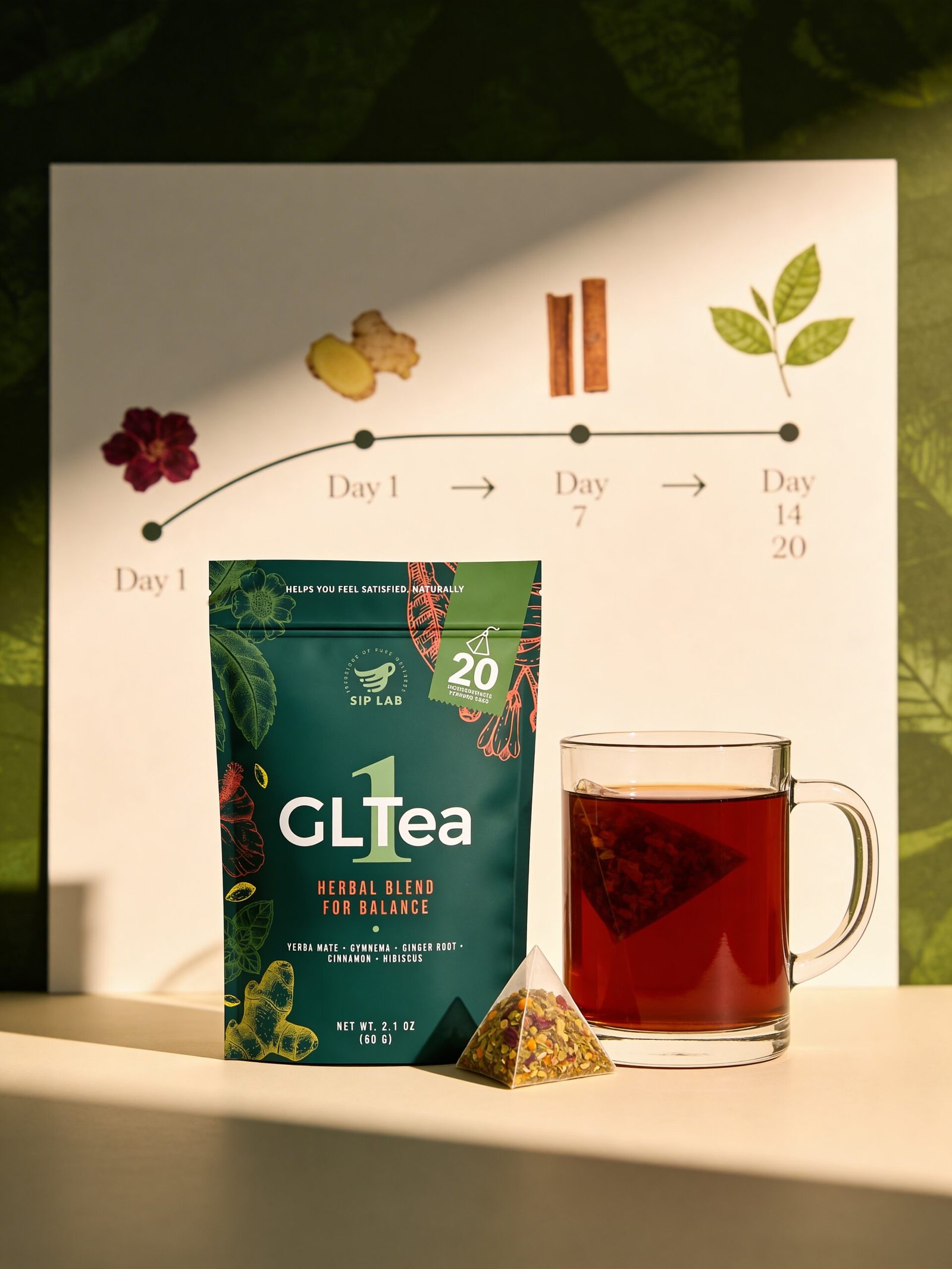
For a morning blend that targets metabolic pathways more directly — with yerba mate for energy, gymnema for sugar management, and ginger for thermogenesis — GLTea-1 was formulated to address the metabolic side of the equation, while a calming herbal like chamomile covers the recovery and stress side.
The Best Time to Drink Chamomile Tea for Weight Loss
The best time to drink chamomile tea for weight loss is 30-60 minutes before bed. This timing targets the two mechanisms with the strongest evidence — sleep quality and evening cortisol reduction — and replaces the late-night snack window, when most stress-driven eating happens, with a zero-calorie ritual.
- Before bed (primary): 1 cup, 30-60 minutes before sleep. Apigenin’s mild sedative effect supports falling asleep, and better sleep normalizes next-day appetite hormones.
- After meals (metabolic protocol): the clinical trials that improved insulin resistance used 1 cup immediately after each main meal, 3 times daily. Choose this pattern if blood sugar stability is your main goal.
- During the evening craving window: if you routinely snack between dinner and bed, brewing chamomile at that exact moment substitutes the habit loop — warm beverage, hands occupied, 0 calories instead of 200-500.
Morning chamomile is not wrong, but it wastes the tea’s comparative advantage: mornings are better served by a caffeinated metabolic tea, with chamomile covering the evening shift. That is the logic of pairing it with a morning blend like a functional weight-management tea.
How to Use Chamomile Tea for Weight Management
- Timing: 30-60 minutes before bed for sleep quality benefits. After meals if targeting blood sugar regulation (based on the Rafraf protocol of 3 cups daily after meals).
- Dose: 1-3 cups per day. The clinical trials used 3 g of chamomile per cup, which is approximately one standard tea bag or one tablespoon of loose flowers.
- Preparation: Steep in hot (not boiling) water for 5-10 minutes with a cover to retain volatile oils. Longer steeping extracts more apigenin.
- What to avoid: Do not add sugar or honey if weight management is the goal — even a tablespoon of honey adds 60 calories and causes the blood sugar spike that chamomile is helping to prevent.
- Consistency: The clinical trials ran 8 weeks. Short-term use will improve sleep quality quickly, but metabolic marker improvements require sustained daily consumption.
Evidence Snapshot
- Rafraf et al. (2015) — Chamomile tea (3x daily for 8 weeks) significantly reduced HbA1c, insulin, insulin resistance, total cholesterol, and triglycerides in type 2 diabetes patients. Published in Journal of Endocrinological Investigation.
- Zemestani et al. (2016) — Chamomile tea improved glycemic indices, insulin resistance, and antioxidant status over 8 weeks. Published in Nutrition.
- Srivastava et al. (2010) — Review of chamomile’s anti-inflammatory, antioxidant, and mild sedative properties via apigenin activity. Published in Molecular Medicine Reports.
- Spaeth et al. (2013) — Sleep restriction increases caloric intake by approximately 385 kcal/day, primarily from fat. Published in Sleep.
- Apigenin cortisol reduction — In vitro study showed 47.5% reduction in cortisol production in human adrenal cells exposed to apigenin.
Frequently Asked Questions
Does chamomile tea burn fat?
No. Chamomile tea does not contain catechins, caffeine, or other compounds with demonstrated thermogenic or fat-oxidation effects. Its weight-related benefits are indirect: improving sleep quality (which regulates appetite hormones), reducing cortisol (which drives visceral fat storage), and supporting blood sugar stability (which reduces cravings). If you want a tea with direct fat-burning evidence, green tea or matcha is the stronger choice.
Can chamomile tea help with belly fat?
Indirectly, possibly. Cortisol specifically promotes visceral (belly) fat storage. By reducing cortisol through its anxiolytic effects, chamomile may help reduce the hormonal signal that drives abdominal fat accumulation. However, no study has directly measured chamomile’s effect on visceral fat in humans. The connection is mechanistically plausible but not clinically proven for fat loss specifically.
How many cups of chamomile tea per day for weight loss?
The clinical trials showing metabolic benefits used 3 cups per day (3 g per cup), consumed after meals. For sleep quality benefits specifically, 1 cup 30-60 minutes before bed is sufficient. Chamomile is caffeine-free and has an excellent safety profile, so 3 cups daily is well-tolerated by most people. Avoid if you have ragweed allergies, as chamomile is in the same plant family.
Is chamomile tea better than green tea for weight loss?
For direct metabolic effects — no. Green tea has substantially stronger evidence for thermogenesis, fat oxidation, and modest weight loss. Chamomile is better for the behavioral and hormonal side: sleep quality, stress management, and evening relaxation. The ideal approach for many people is a metabolism-supporting tea (green tea, matcha, or a functional blend) in the morning and chamomile in the evening. They address different parts of the weight management equation.
Can I drink chamomile tea while fasting?
Yes. Plain chamomile tea contains 0 calories, no sugar, and no protein, so it does not break a fast — including intermittent fasting windows and time-restricted eating. It is actually one of the better fasting companions: it blunts the cortisol elevation that fasting can trigger and helps manage hunger during the evening hours of a fast. Just keep it unsweetened — honey or sugar ends the fast. More on this in our intermittent fasting and tea guide.
Can I drink chamomile tea while taking weight loss medication?
Chamomile has few known drug interactions, but consult your healthcare provider before combining it with any medication. Because chamomile may lower blood sugar and has mild blood-thinning properties, it could interact with diabetes medications or anticoagulants. For GLP-1 agonists like semaglutide (Ozempic/Wegovy), there are no documented interactions, but professional guidance is always appropriate when combining supplements with prescription medications.
The Bottom Line
Chamomile tea is not a weight loss tea in the way that green tea or matcha are. It does not increase thermogenesis or fat oxidation. What it does is address three of the most common saboteurs of weight loss: poor sleep, chronic stress, and blood sugar instability. If those are factors in your life, chamomile is a low-cost, zero-calorie, evidence-supported addition to your evening routine that removes barriers to fat loss — even if it does not directly cause it.
*These statements have not been evaluated by the Food and Drug Administration. This product is not intended to diagnose, treat, cure, or prevent any disease. Consult your healthcare provider before making changes to your diet or supplement routine.
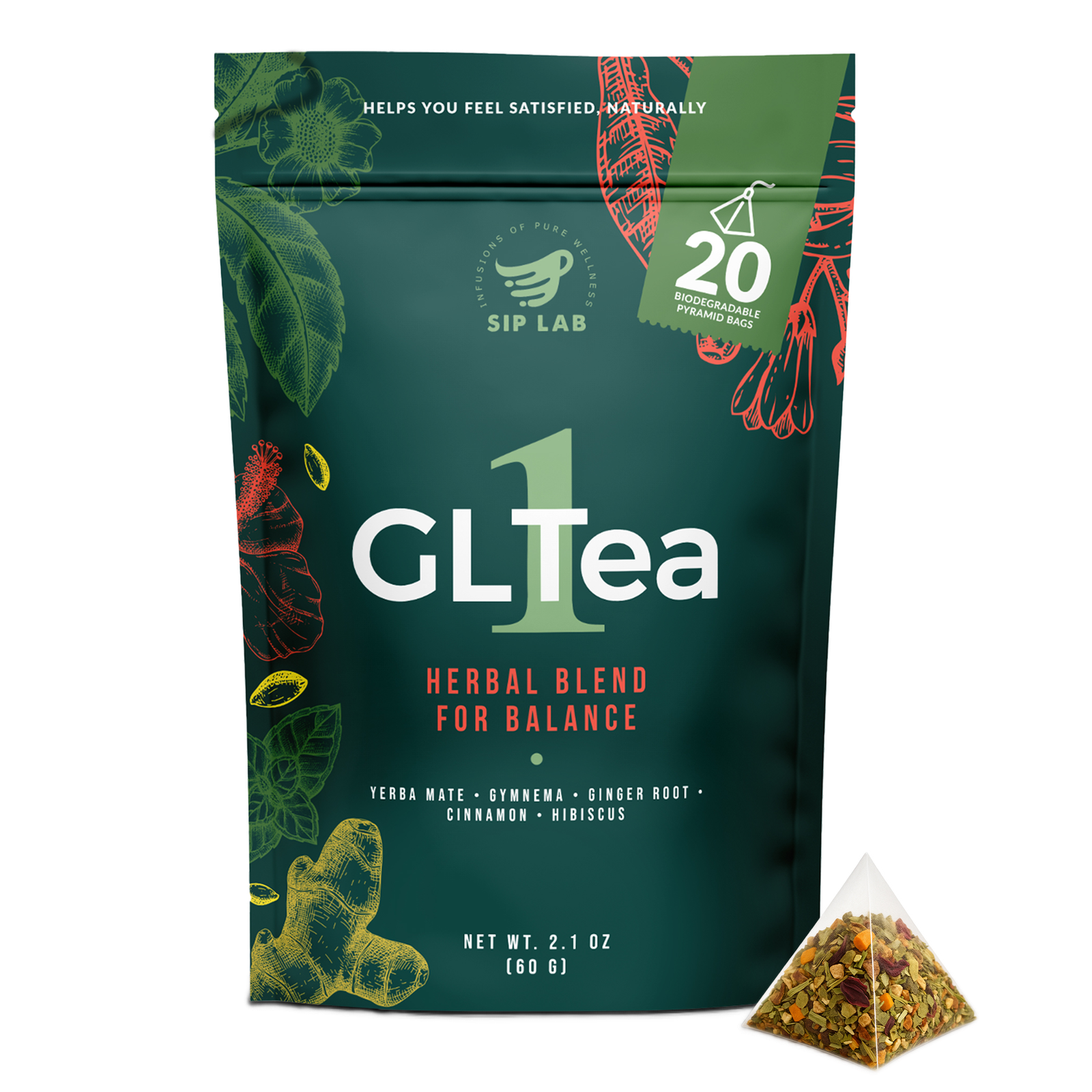
GLTea-1 — Herbal Blend for Balance
Yerba Mate + Gymnema + Ginger Root + Ceylon Cinnamon + Hibiscus
20 biodegradable pyramid bags • $12.99 (on sale) • Under $0.65/cup