Walk down a spice aisle and every jar says “cinnamon.” Four different barks are sold under that single word, and they are not interchangeable. The differences in flavour are easy to taste. The difference that actually matters for anyone using cinnamon daily is a compound called coumarin.
This is the short version: Ceylon contains only trace coumarin. Saigon contains the most of any common type. Cassia and Korintje sit in between. If cinnamon is an occasional baking ingredient, this is trivia. If you drink it every day, it is the whole question.
There are four cinnamons on the shelf, not two
Most comparisons stop at “Ceylon vs Cassia,” which is why so many people are surprised to learn the cinnamon they buy is a third thing entirely.
- Ceylon (Cinnamomum verum) — from Sri Lanka. Sold as “true cinnamon.” Pale tan, delicate, faintly citrusy and floral. The most expensive and the hardest to find in a supermarket.
- Saigon (Cinnamomum loureiroi) — from Vietnam. The boldest and sweetest, with the highest volatile oil content of the group. This is what most American “gourmet” cinnamon is. It also carries the most coumarin.
- Cassia (Cinnamomum cassia) — from China. The default supermarket cinnamon. Dark reddish-brown, strong, slightly bitter at the finish.
- Korintje (Cinnamomum burmannii) — from Indonesia. The commodity workhorse behind a great deal of pre-ground cinnamon and most commercial baked goods.
Saigon, Cassia and Korintje are all cassia-family barks. When a label says “cinnamon” with no further detail, it is almost certainly one of those three.
The four types side by side
| Type | Species | Origin | Relative coumarin | Flavour | Best for |
|---|---|---|---|---|---|
| Ceylon | C. verum | Sri Lanka | Trace | Light, citrus, floral | Daily use, tea, coffee |
| Saigon | C. loureiroi | Vietnam | Highest | Boldest, sweet, spicy | Baking, occasional use |
| Cassia | C. cassia | China | High | Strong, slightly bitter | General cooking |
| Korintje | C. burmannii | Indonesia | High | Mild, earthy | Commercial baking |
The pattern in that final column is the practical takeaway: three of the four are cooking spices and one of them is a daily-use spice.
Coumarin is the reason the distinction matters
Coumarin is a naturally occurring aromatic compound. It is part of what gives cassia-type cinnamon its characteristic sweet-warm smell, and in small quantities it is unremarkable. In sustained large quantities it has been associated with liver stress in sensitive individuals, which is why European food-safety bodies set a limit on it at all.
The European Food Safety Authority established a tolerable daily intake for coumarin of 0.1 mg per kilogram of body weight per day. For an adult around 70 kg, that is roughly 7 mg a day, understood as a long-term average rather than a hard daily ceiling.
The gap between the types is not subtle. Ceylon’s coumarin content is routinely reported in trace amounts, while cassia-family barks are reported at orders of magnitude higher, with Saigon typically the highest of the group. Published figures vary considerably between samples, growing regions and harvests — which is itself the point. You cannot know what you are getting from a jar labelled only “cinnamon.”
What that means in practice
A teaspoon of ground cassia-type cinnamon is roughly 2.6 grams. At commonly reported coumarin levels, a daily teaspoon can put an average adult near or above that tolerable intake, without counting cinnamon from any other source in the diet. The same teaspoon of Ceylon does not come close.
This is not a reason to be alarmed about cinnamon. It is a reason to know which one is in your cup:
- Occasional baking — the type barely matters. Use whichever tastes right.
- Daily tea, coffee, oatmeal or supplements — the type matters, because exposure is cumulative and the daily dose is the one that adds up.
- Children — smaller body weight means a proportionally smaller tolerable intake.
- Anyone with existing liver concerns or on medication metabolised by the liver — worth raising with a doctor rather than resolving from a blog post.
How to tell them apart without a label
The physical differences are genuinely easy to read once you know what you are looking at.
By sight
Ceylon quills are pale tan and made of many thin, papery layers rolled together, closer to a cigar than a tube. Cassia-type quills are dark reddish-brown, thick, and usually a single hard layer curled in on itself from both sides.
By feel
Ceylon is brittle and crumbles under finger pressure. Cassia is hard enough that breaking a stick by hand is a struggle — it wants a grinder.
By smell and taste
Ceylon is lighter, with citrus and floral notes underneath the warmth. Saigon is the most intensely sweet and spicy. Cassia is blunt and strong with a faintly bitter finish.
By price and label
Ceylon costs several times more, and sellers who have it say so — the word “Ceylon” or “Cinnamomum verum” will be on the front of the package. Ambiguity is itself information. A jar that says only “cinnamon” is a cassia type.
When cassia is the better choice
Ceylon is not simply the superior cinnamon, and any article that frames it that way is selling something. Cassia and Saigon are bolder, sweeter, and hold up to heat far better. In a cinnamon roll, a spiced cake, or anything where cinnamon is meant to announce itself, Ceylon can read as thin and disappear into the bake.
The honest framing is culinary versus habitual. For flavour intensity in occasional cooking, cassia types win. For anything consumed daily, Ceylon is the one that scales safely.
What to check before you buy
- Look for the species name. “Cinnamomum verum” or “Ceylon” on the front of the pack is the only reliable signal. “Cinnamon” alone is a cassia type.
- Treat “organic” as unrelated. Organic Korintje is still Korintje. The certification says nothing about which bark is in the jar.
- Be sceptical of “true cinnamon” without a species. The phrase is not regulated in the way the botanical name is.
- Check blends, not just jars. Chai, spice mixes and tea blends are where unlabelled cassia most often turns up, because it is cheap and the ingredient list does not have to specify.
- Expect to pay more. Ceylon is harder to grow and harvest. A suspiciously cheap “Ceylon” is worth a second look.
Why this shows up in tea
Tea is the clearest case of habitual use. A daily cup is, by definition, a daily dose — which is exactly the pattern where coumarin accumulates and exactly the pattern most cinnamon tea blends never mention.
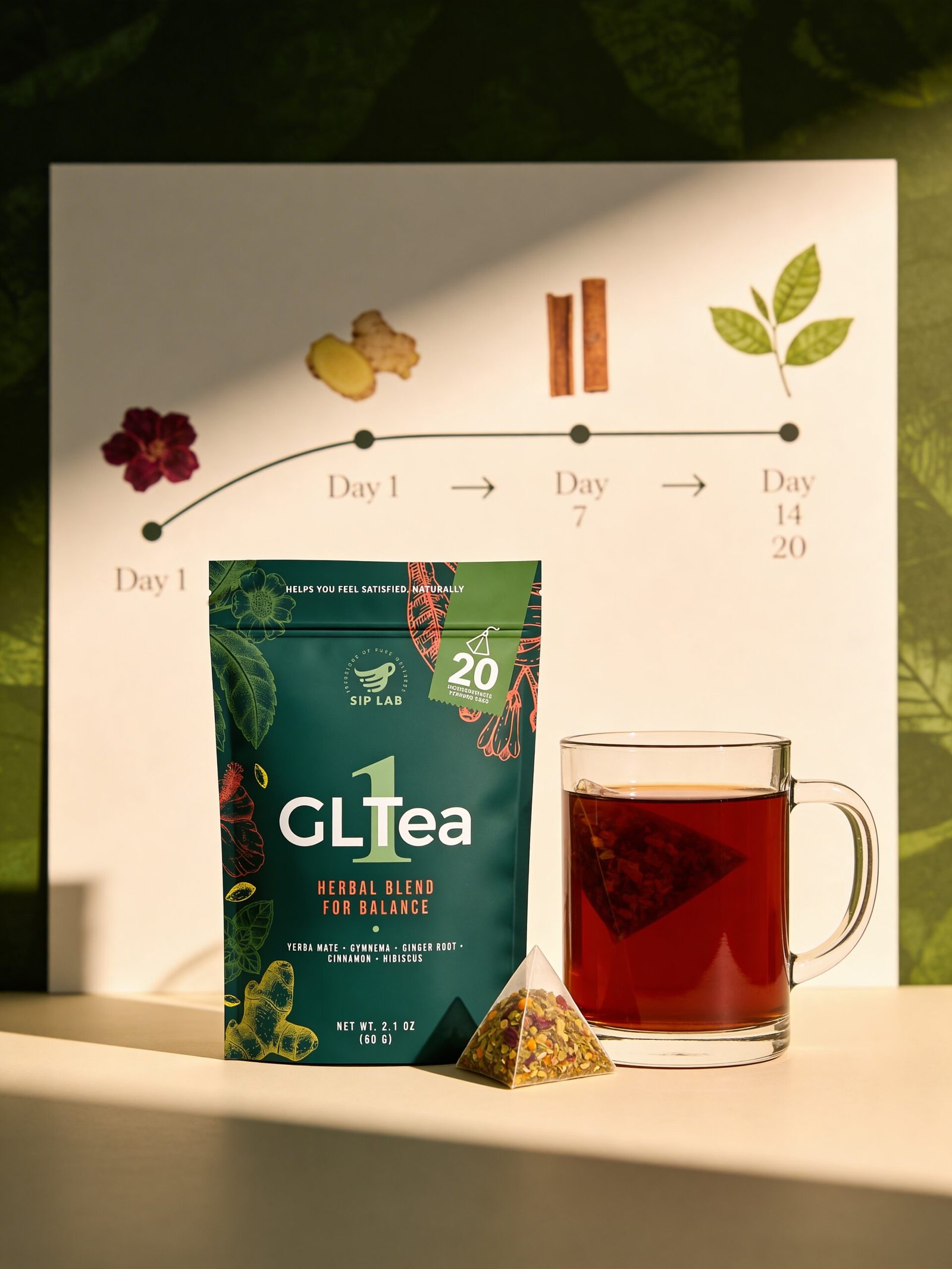
Very few blends specify their cinnamon type, because Korintje and Cassia cost a fraction of Ceylon and “cinnamon” on an ingredient list is legally sufficient. That is why GLTea-1 names Ceylon cinnamon specifically on the label rather than listing “cinnamon” and leaving it there. A blend built for daily drinking should be able to tell you which bark is in it.
Evidence snapshot
- EFSA (European Food Safety Authority) established the tolerable daily intake for coumarin at 0.1 mg/kg body weight per day.
- Germany’s Federal Institute for Risk Assessment (BfR) has published repeated guidance on coumarin exposure from cassia cinnamon in food, and is the source most often cited for the concern.
- Botanical identity: Cinnamomum verum (Ceylon) is a distinct species from C. cassia, C. loureiroi (Saigon) and C. burmannii (Korintje), which are grouped commercially as cassia.
- Measured coumarin content varies widely between samples and harvests even within a single type, which is why sourcing and labelling matter more than any single published figure.
Frequently asked questions
Is Saigon cinnamon bad for you?
No, not in normal culinary amounts. Saigon carries more coumarin than the other common types, so the consideration is daily volume rather than occasional use. As a baking spice a few times a month it is not a concern.
Is Saigon cinnamon the same as cassia?
It belongs to the cassia family but is a distinct species, Cinnamomum loureiroi. It is generally sweeter and more intense than Chinese cassia, and typically higher in coumarin.
How much Ceylon cinnamon is safe per day?
Ceylon’s coumarin content is low enough that the tolerable daily intake is not the limiting factor at normal culinary amounts. That said, no spice needs to be consumed in unlimited quantity, and anyone taking cinnamon as a supplement rather than a food should talk to a clinician.
Which cinnamon is in most supermarket jars?
Almost always a cassia type — Korintje or Chinese cassia. Ceylon is labelled as Ceylon, because it costs more and sellers want you to know.
Does the type of cinnamon change the flavour of tea?
Noticeably. Ceylon is lighter and more citrusy and sits underneath other botanicals. Cassia types are blunter and tend to dominate a blend.
Bottom line
Four barks are sold as cinnamon, and the one that matters for daily use is the one that tells you which it is. Saigon and the other cassia types are excellent baking spices and a poor fit for something you drink every morning. Ceylon is the reverse. If a product will not name its cinnamon, that is the answer.
These statements have not been evaluated by the Food and Drug Administration. This product is not intended to diagnose, treat, cure, or prevent any disease.