Does herbal tea help with appetite control? The research says yes — certain botanicals can reduce hunger, stabilize blood sugar, and reduce cravings when used consistently. But the honest answer is more nuanced than most wellness blogs will tell you. Some herbal teas have genuine research behind them. Others are riding on tradition and marketing alone. This guide separates what the science actually supports from what it does not.
The interest in herbal tea for appetite control has surged in recent years, driven partly by growing awareness of GLP-1 receptor agonist medications and partly by a broader cultural shift toward natural health approaches. But interest and evidence are different things. Here is what we know, what we do not know, and what matters for practical results.
The Research Landscape: Where We Stand
Research on herbal teas and appetite control exists across a spectrum. Some botanicals — like green tea catechins and Yerba Mate — have been studied in multiple controlled trials with consistent results. Others have promising preliminary data but lack the large-scale human studies needed for definitive conclusions. And some popular “appetite control” herbs have almost no rigorous evidence at all.
Being honest about this spectrum matters. The supplement and tea industry has a habit of treating any positive preliminary study as proof of efficacy, and that is not how science works. At the same time, dismissing centuries of traditional use because large randomized controlled trials have not been conducted would be equally intellectually dishonest.
The most useful approach is to look at botanicals that have both traditional use history and at least some modern research support, while being transparent about the limitations of the evidence. That is the standard we apply here and that we apply to GLTea-1’s formulation.
How Herbal Tea Affects Appetite: The Biological Mechanisms
Herbal teas can influence appetite through several distinct biological pathways. Understanding these mechanisms helps you evaluate which botanicals might actually work and which are just marketing noise.
- Satiety hormone support (GLP-1): Certain botanicals, particularly Yerba Mate, have been shown in studies to stimulate GLP-1 release. GLP-1 is a gut hormone that signals fullness to the brain and slows gastric emptying, making you feel satisfied longer after eating. This is the most exciting mechanism in the herbal appetite control space because it aligns with the same pathway used by prescription weight management medications.
- Blood sugar stabilization: Herbs like Ceylon cinnamon and Gymnema Sylvestre help regulate blood glucose levels, preventing the spikes and crashes that trigger hunger and cravings. When blood sugar is stable, the body does not send emergency hunger signals, and the urge to snack between meals decreases significantly.
- Thermogenesis: Some botanicals increase heat production in the body, which burns additional calories and can modestly increase metabolic rate. Green tea catechins (EGCG) and ginger are the most researched thermogenic herbs.
- Taste receptor modulation: Gymnema Sylvestre uniquely blocks sweet taste receptors on the tongue, making sugary foods less appealing for one to two hours after consumption. This directly reduces craving-driven eating.
- Calorie-free ritual replacement: This mechanism is behavioral rather than biochemical, but it matters. The act of preparing and drinking a warm cup of tea provides a sensory experience that can replace mindless snacking. Research in behavioral science suggests that ritual-based habits are easier to maintain than restriction-based habits.
Botanical Categories: What the Evidence Supports
Thermogenic Herbs
Thermogenic botanicals increase heat production and energy expenditure. The evidence base varies significantly within this category.
Green tea (EGCG + caffeine): This is the most studied thermogenic botanical, with multiple meta-analyses confirming modest increases in energy expenditure and fat oxidation. The combination of EGCG and caffeine appears to be more effective than either compound alone. Research suggests a daily intake of 400 to 500mg of EGCG combined with 100 to 200mg of caffeine can increase daily energy expenditure by roughly 100 to 150 calories. The effect is real but modest — it supports fat loss rather than causing it on its own.
Ginger: Studies suggest ginger increases thermogenesis and may reduce hunger perception. The evidence is consistent across several small trials, though large-scale studies are limited. Ginger also supports digestive comfort, which is a practical benefit for people who experience bloating or discomfort that can be confused with hunger.
Cayenne and capsaicin: Research supports capsaicin’s thermogenic effects, though the required doses are often higher than what most people find palatable in a tea. The mechanism is well-established — capsaicin activates TRPV1 receptors that increase heat production — but the practical application in tea form is limited by taste tolerance.
Bitter Herbs for Craving Control
Bitter compounds interact with taste receptors and digestive signaling in ways that can reduce appetite and cravings.
Gymnema Sylvestre: The strongest evidence in this category. Gymnemic acids block sweet taste receptors and reduce sugar absorption in the gut. The taste-blocking effect is rapid and reproducible. Multiple studies confirm reduced sugar intake and cravings with consistent use. This is one of the few botanicals where the mechanism is clearly understood and reliably demonstrated.
Bitter melon: Some research suggests blood sugar-regulating effects, but the evidence for direct appetite control is weaker than for Gymnema. More commonly studied in the context of diabetes management than weight management.
Dandelion root: Often included in appetite teas, but the evidence for appetite control is thin. Dandelion is primarily a mild diuretic, and any “weight loss” effect is water loss, not fat metabolism. It has legitimate digestive benefits but should not be relied upon for appetite control.
Adaptogens for Stress-Related Eating
Stress-related eating is one of the most common drivers of excess calorie intake, and it operates through a completely different pathway than physical hunger. When cortisol is chronically elevated, the body craves high-calorie, high-sugar foods as a survival mechanism. Adaptogenic herbs may help by modulating the stress response.
Ashwagandha: Several studies suggest ashwagandha reduces cortisol levels and perceived stress. While direct appetite control studies are limited, the stress-reduction pathway is a plausible mechanism for reducing stress-driven eating. The evidence is suggestive rather than definitive for appetite specifically.
Rhodiola: Research suggests Rhodiola supports stress resilience and mental performance under pressure. Its connection to appetite control is indirect — through stress management — rather than through direct hunger or craving modulation.
Holy basil (Tulsi): Traditional Ayurvedic use for stress and blood sugar regulation. Some modern studies support both effects, but the evidence base for appetite control specifically is still developing.
The honest assessment: adaptogens may help with appetite control indirectly by reducing the stress that drives emotional eating, but they are not direct appetite suppressants. Including them in a weight management protocol makes sense as part of a comprehensive approach, not as a standalone solution.
Top Herbal Teas for Appetite Control: Evidence-Based Rankings
1) Yerba Mate
Stimulates GLP-1 and reduces hunger between meals. Provides sustained energy through a balanced caffeine and theobromine profile. Multiple controlled studies support appetite-reducing effects. Among all herbal teas studied for appetite control, Yerba Mate has perhaps the strongest combination of traditional use history and modern research support.
2) Gymnema Sylvestre
Blocks sweet taste receptors, reducing sugar cravings for one to two hours after consumption. Also reduces sugar absorption in the gut and supports blood sugar stability. The mechanism is clearly understood and reliably demonstrated in research. Over 2,000 years of traditional use in Ayurvedic medicine.
3) Green Tea
The most extensively researched tea for metabolism and fat oxidation. EGCG and caffeine together increase thermogenesis and energy expenditure. Appetite effects are secondary to metabolic effects but are supported by research. The L-theanine content also supports calm focus, which helps with mindful eating practices.
Looking for a functional tea with these ingredients?
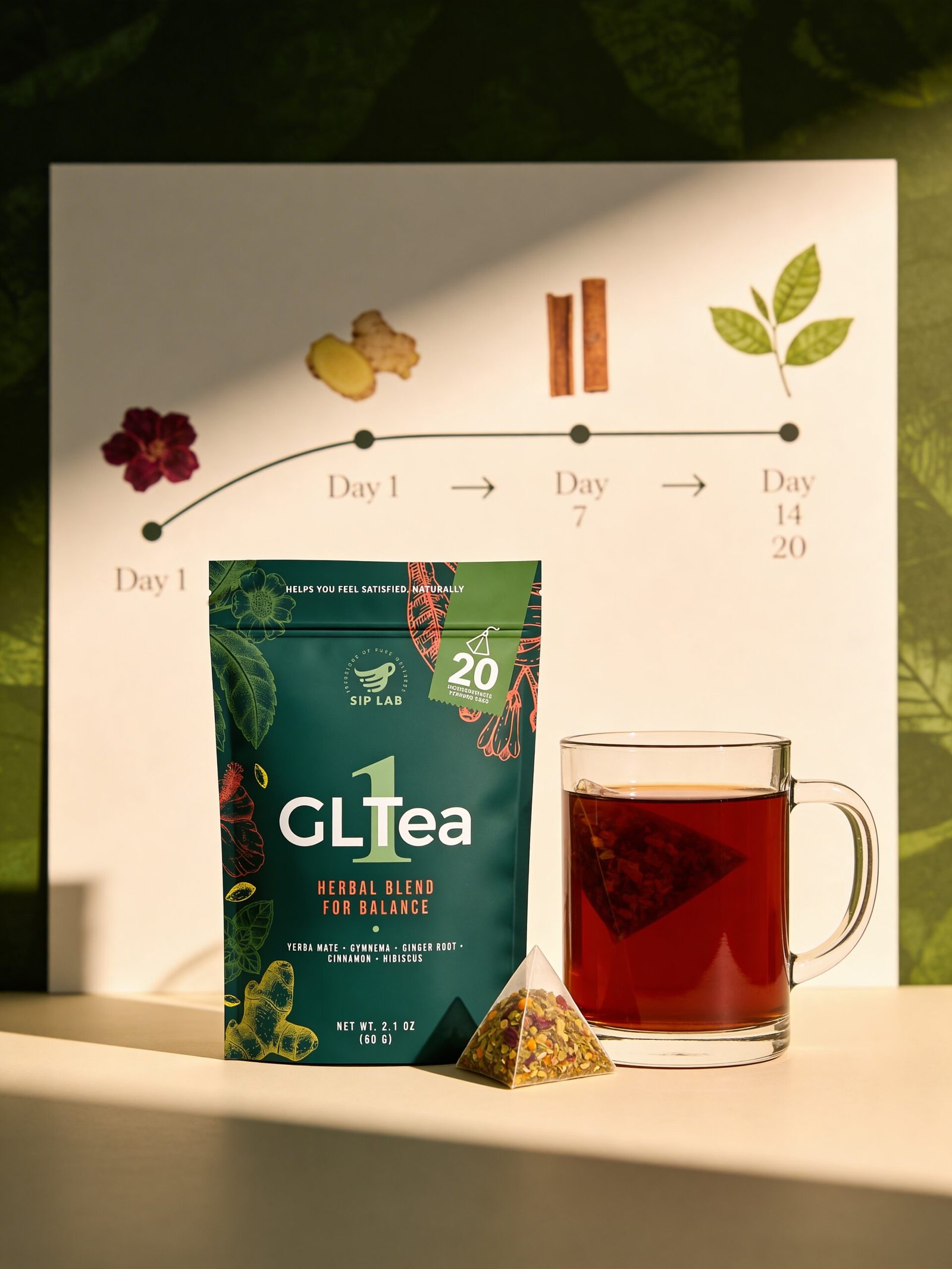
GLTea-1 combines yerba mate, gymnema, ginger, cinnamon, and hibiscus in a single daily cup. Learn more or shop on Amazon.
4) Ginger
Thermogenic compound that increases heat production and improves digestive comfort. Studies suggest ginger reduces hunger perception and supports satiety. Also reduces nausea and bloating, which can be confused with or contribute to appetite disturbances.
5) Ceylon Cinnamon
Stabilizes blood sugar and prevents the insulin-driven hunger rebounds that trigger snacking. Research supports cinnamon’s effects on insulin sensitivity and glucose metabolism. Important to use Ceylon cinnamon (not cassia) for daily consumption due to lower coumarin content.
What the Evidence Does NOT Support
Transparency requires acknowledging what herbal tea cannot do. Here is where the evidence falls short:
- No herbal tea will cause significant weight loss on its own. Even the most effective botanicals provide modest metabolic support that works best alongside a calorie deficit and physical activity.
- “Detox” teas do not control appetite. Products built around laxatives like senna cause water loss, not appetite reduction. They may actually increase hunger by depleting nutrients and energy. For more on this, see our breakdown of metabolism tea vs detox tea approaches.
- Single-ingredient teas have limited effects. Drinking plain green tea or plain ginger tea provides some benefit, but the research suggests that multi-botanical approaches that target multiple pathways simultaneously produce more meaningful results than any single herb alone.
- Proprietary blends with undisclosed doses may contain ineffective amounts. If a label does not tell you how much of each ingredient is in the product, you have no way to know if it matches the doses used in research.
How GLTea-1’s 8 Botanicals Map to Research-Supported Mechanisms
GLTea-1 was formulated to address multiple appetite and metabolism pathways simultaneously, using botanicals with both traditional use history and modern research support:
- GLP-1 and satiety support: Yerba Mate
- Thermogenesis and fat oxidation: Green tea (EGCG), ginger
- Craving control: Gymnema Sylvestre
- Blood sugar stabilization: Ceylon cinnamon, Gymnema
- Sustained energy: Green tea, Yerba Mate
Every ingredient is listed with its exact amount on the label. No proprietary blends. No laxatives. No hidden fillers. The formula is designed for daily use as part of a consistent routine, not as a quick fix. For a detailed comparison of how this multi-botanical approach compares to other products, see our best weight loss tea comparison.
The Role of Daily Rituals in Appetite Management
Beyond the biochemistry, there is a behavioral science dimension to herbal tea and appetite control that deserves attention. The act of making and drinking tea is itself a powerful tool for managing eating behavior.
Research in behavioral psychology shows that habits anchored to specific rituals are significantly easier to maintain than habits based on restriction or willpower alone. A daily tea ritual creates a structured pause in the day — a moment of intentionality that interrupts automatic snacking patterns.
Consider the difference between “I will not snack at 3 PM” (restriction-based, requires willpower) and “At 3 PM, I make my afternoon tea” (ritual-based, replaces the behavior). The second approach works better because it provides a positive action rather than a void. The warm cup, the preparation process, and the sensory experience of drinking tea all provide the comfort and oral stimulation that many people seek from snacking.
This is not a minor point. Many people who start drinking herbal tea for its botanical benefits find that the ritual itself becomes one of the most powerful appetite management tools in their routine. The biochemical support from the botanicals and the behavioral support from the ritual work together in a way that neither achieves alone.
How to Use Herbal Tea for Results
- Drink 30 to 60 minutes before meals to allow satiety-supporting compounds like GLP-1 agonists to take effect before you sit down to eat
- 2 to 3 cups per day provides consistent botanical exposure without excessive caffeine intake
- Combine with protein-rich meals for synergistic satiety — protein and herbal tea together produce stronger appetite control than either alone
- Be consistent — many of the metabolic and blood sugar benefits build over days and weeks, not hours. Occasional use gives you some acute effects but misses the compounding benefits
- Use it as a ritual replacement for snacking, especially in the mid-afternoon window when cravings typically peak
Bottom Line
Herbal tea can meaningfully support appetite control when you choose the right botanicals and use them consistently. The evidence is strongest for Yerba Mate (GLP-1 and satiety), Gymnema (craving control), green tea (thermogenesis), ginger (thermogenesis and satiety), and Ceylon cinnamon (blood sugar stability). Multi-botanical formulas that target several pathways simultaneously offer more comprehensive support than single-ingredient teas.
But herbal tea is a tool, not a miracle. It works best as part of a consistent routine that includes reasonable nutrition and regular physical activity. The right formula removes friction and makes sustainable calorie management easier. It does not replace the fundamentals.
Related: GLP-1 Tea: The Complete Guide to Botanical GLP-1 Support
FAQ
Does green tea suppress appetite?
Green tea has modest appetite-suppressing effects, primarily through its caffeine content and EGCG. However, green tea’s primary strength is metabolic support — increasing thermogenesis and fat oxidation — rather than direct appetite suppression. For stronger appetite control, green tea works best when combined with botanicals like Yerba Mate (which supports GLP-1 satiety hormones) and Gymnema (which blocks sugar cravings). The combination approach is more effective than green tea alone.
What is the strongest natural appetite suppressant?
Among herbal teas and botanicals, Yerba Mate has the strongest evidence for appetite suppression due to its support of GLP-1, a satiety hormone that signals fullness to the brain. For sugar cravings specifically, Gymnema Sylvestre is the most effective natural option because it physically blocks sweet taste receptors on the tongue. No single botanical matches the appetite suppression of prescription medications, but multi-botanical formulas that combine several mechanisms — like GLP-1 support, craving control, and blood sugar stabilization — can produce meaningful, sustainable appetite reduction.
Can herbal tea replace meals for weight loss?
No. Herbal tea should never be used as a meal replacement. It contains minimal to no calories and does not provide the protein, fats, vitamins, and minerals your body needs to function. Using tea to skip meals leads to nutrient deficiency, muscle loss, metabolic slowdown, and eventual rebound eating. The correct use of herbal tea for appetite control is to drink it between meals or 30 to 60 minutes before meals to support satiety and reduce the total amount of food you eat at each sitting — not to eliminate meals entirely.
How long before herbal tea shows appetite control results?
Some effects are immediate — Gymnema’s sweet taste blocking works within minutes, and the caffeine in green tea and Yerba Mate provides acute energy and mild appetite reduction within 30 to 60 minutes. The deeper benefits of blood sugar stabilization, GLP-1 support, and metabolic improvement build over one to two weeks of consistent daily use. Most people report noticeable changes in their appetite patterns and cravings within the first two weeks.
Is herbal tea safe for daily appetite control?
Yes, as long as the tea avoids laxatives (like senna), excessive caffeine, and undisclosed proprietary blends. A well-formulated herbal tea with transparent ingredients and moderate caffeine from natural sources like green tea and Yerba Mate is designed for consistent daily use. People on blood sugar-lowering medications should consult their healthcare provider before adding Gymnema or cinnamon to their routine, as these botanicals may enhance the medication’s effects.
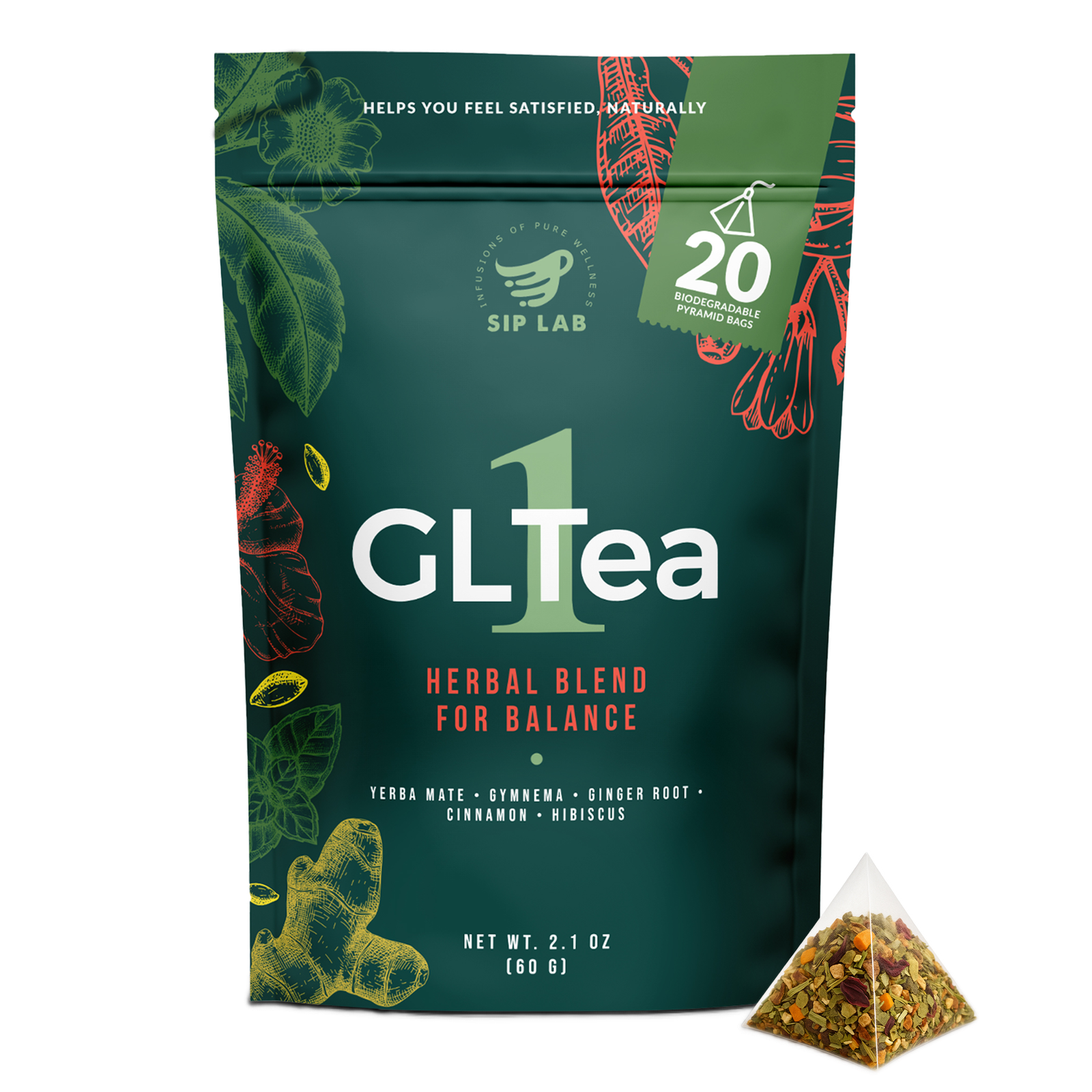
GLTea-1 — Herbal Blend for Balance
Yerba Mate + Gymnema + Ginger Root + Ceylon Cinnamon + Hibiscus
20 biodegradable pyramid bags • $12.99 (on sale) • Under $0.65/cup • No laxatives, no fillers