
Metabolism tea and detox tea are often confused — but they are fundamentally different. One supports fat metabolism and energy expenditure through research-backed botanical compounds. The other relies on laxatives that cause temporary water loss and can damage your digestive system over time. If your goal is real fat loss, you want metabolism tea — not detox tea.
The difference between these two categories matters more than most people realize. Choosing the wrong one does not just waste your money — it can set your progress back and create unhealthy patterns. This guide breaks down the metabolism tea vs detox tea debate with full transparency so you can make an informed decision.
What Is Metabolism Tea?
Metabolism tea refers to blends that support thermogenesis (heat production), fat oxidation, and energy expenditure. These teas typically include compounds like EGCG from green tea, natural caffeine, ginger, and warming spices that gently increase metabolic rate without overstimulating the nervous system.
The term “metabolism tea” covers a broad category, but the best formulations work through multiple mechanisms simultaneously. Here is what a well-designed metabolism tea actually does in the body:
Thermogenesis support. Thermogenesis is the process by which your body generates heat and burns calories. Certain botanical compounds — particularly EGCG and caffeine working together — have been shown in research to increase thermogenic activity. This is not a dramatic calorie burn, but a modest and sustained increase that compounds over weeks and months of consistent use.
GLP-1 satiety support. Some metabolism tea ingredients, notably Yerba Mate, have been shown in studies to support the release of GLP-1 (glucagon-like peptide-1), a satiety hormone that signals fullness to the brain. This is the same hormonal pathway targeted by prescription weight management medications, though botanical support works at a much milder level. The result is a natural reduction in appetite that makes it easier to maintain a calorie deficit without constant hunger.
Sustained energy without crashes. Unlike detox teas that leave you drained, metabolism teas that include natural caffeine sources like green tea and Yerba Mate provide clean, sustained energy. The L-theanine naturally present in green tea works alongside caffeine to promote calm alertness rather than jittery spikes. This sustained energy supports both physical activity and the mental discipline needed for consistent dietary choices.
Blood sugar stabilization. Ingredients like Ceylon cinnamon and Gymnema Sylvestre help stabilize blood sugar levels, which directly impacts hunger and cravings. When blood sugar stays stable, you avoid the crashes that trigger emergency snacking and poor food decisions.
What Is Detox Tea?
Most “detox teas” contain stimulant laxatives like senna or cascara sagrada. These cause the body to expel water and waste rapidly, creating the illusion of weight loss on the scale. But it is not fat loss — and it is not sustainable. The weight returns as soon as you rehydrate, which your body needs to do to function properly.
The detox tea industry thrives on a fundamental misunderstanding: the idea that your body accumulates “toxins” that need to be flushed out with special products. In reality, your liver, kidneys, and lymphatic system already handle detoxification continuously. No tea can improve upon these systems in a healthy person.
What detox teas actually do is stimulate bowel movements and increase water excretion. The “flat stomach” effect people report after a detox tea is simply dehydration and emptied bowels — not reduced body fat. Within 24 to 48 hours of normal eating and hydration, the scale returns to exactly where it was.
The Problem With Detox Teas
- Temporary water weight loss only — no actual fat is burned or metabolized
- Dehydration and electrolyte imbalance — which can cause headaches, dizziness, and muscle cramps
- Digestive dependency — regular use of stimulant laxatives can weaken natural bowel function over time
- Zero impact on actual fat metabolism — these products do not increase thermogenesis or fat oxidation
- Nutrient malabsorption — rapid transit through the gut reduces your body’s ability to absorb vitamins and minerals from food
- False sense of progress — the scale drops create a psychological trap that keeps you buying products that do nothing for long-term body composition
How Metabolism Tea Supports Real Fat Loss
A quality metabolism tea works through multiple evidence-based pathways rather than a single gimmick. Here are the key mechanisms and the botanicals that support them:
- EGCG (green tea): increases fat oxidation and supports thermogenesis, particularly when combined with caffeine. Research suggests the combination is more effective than either compound alone.
- Caffeine (from green tea and Yerba Mate): boosts energy expenditure and enhances the fat-oxidation effects of other compounds. Natural caffeine from tea sources provides a smoother experience than synthetic caffeine.
- Ginger: thermogenic compound that increases heat production and improves digestive comfort. Studies suggest ginger may also support satiety and reduce hunger perception.
- Cinnamon (Ceylon): stabilizes blood sugar and reduces insulin spikes, which helps prevent fat storage and reduces cravings driven by blood sugar crashes.
- Yerba Mate: supports GLP-1 release, increases satiety, and provides balanced energy. One of the most researched botanicals for appetite and metabolism support.
- Gymnema Sylvestre: blocks sweet taste receptors on the tongue, directly reducing sugar cravings. Also supports healthy blood sugar levels by reducing sugar absorption in the gut.
The key difference is that metabolism tea supports your body’s natural fat-burning processes. It does not force anything artificial. It creates conditions — higher energy expenditure, better appetite regulation, more stable blood sugar — that make fat loss easier when combined with a reasonable calorie deficit. For a deeper look at how these botanicals compare across products, see our best weight loss tea comparison.
Metabolism Tea vs Detox Tea: Side-by-Side Comparison
| Factor | Metabolism Tea | Detox Tea |
|---|---|---|
| Primary mechanism | Thermogenesis, fat oxidation, appetite regulation | Laxative-induced water and waste expulsion |
| Weight loss type | Supports actual fat loss over time | Temporary water weight only |
| Key ingredients | Green tea, Yerba Mate, ginger, cinnamon, Gymnema | Senna, cascara sagrada, proprietary laxative blends |
| Energy effect | Sustained, clean energy | Often causes fatigue and dehydration |
| Safe for daily use | Yes, when properly formulated | No — long-term laxative use causes dependency |
| Appetite support | Yes — GLP-1, blood sugar, craving reduction | No — may increase hunger from nutrient loss |
| Research backing | Multiple clinical studies on individual botanicals | No clinical evidence supporting fat loss |
| Long-term sustainability | Designed for consistent daily use | Not recommended beyond short-term use |
What to Look for on the Label
Not all metabolism teas are created equal. Some products slap a “metabolism” label on what is essentially a detox tea in disguise. Here is how to tell the difference before you buy.
Looking for a functional tea with these ingredients?
GLTea-1 combines yerba mate, gymnema, ginger, cinnamon, and hibiscus in a single daily cup. Learn more or shop on Amazon.
Red Flags — Walk Away
- Senna leaf or senna extract — this is a stimulant laxative, full stop. Its presence means this is a detox tea regardless of what the label says.
- Cascara sagrada — another laxative ingredient commonly hidden in “cleanse” blends.
- Proprietary blends with hidden amounts — if the label says “proprietary metabolism blend 500mg” without listing individual ingredient amounts, you have no idea what you are getting. This is how companies hide ineffective doses and cheap fillers.
- “Rapid results” or “lose weight fast” claims — any product promising fast weight loss is selling you water loss, not fat loss.
- Diuretics as primary ingredients — dandelion root and uva ursi have legitimate uses, but when they dominate a formula, the product is designed to shed water, not support metabolism.
Green Flags — Worth Considering
- Transparent ingredient labels with exact amounts — you should know precisely how much of each botanical you are consuming per serving.
- Research-backed botanicals — green tea extract (with EGCG), Yerba Mate, Gymnema Sylvestre, ginger, and Ceylon cinnamon all have published research supporting their use.
- No laxatives of any kind — a real metabolism tea does not need laxatives to work.
- Moderate, natural caffeine levels — enough to support thermogenesis without causing anxiety or sleep disruption.
- Clear dosing instructions — serious formulations tell you exactly how to use them for best results.
Evidence Snapshot
Meta-analyses show green tea catechins increase energy expenditure and fat oxidation, particularly when combined with caffeine. The effect is modest but clinically meaningful — roughly 100 to 150 additional calories burned per day in some studies. Ginger and cinnamon support insulin sensitivity, which reduces fat storage and cravings. Yerba Mate has demonstrated appetite-reducing effects in multiple controlled studies, with researchers noting increased GLP-1 levels and delayed gastric emptying. None of these effects are dramatic on their own, but layered together in a well-designed formula, they create meaningful metabolic support.
GLTea-1: Metabolism + Satiety Formula
GLTea-1 was designed as a metabolism tea, not a detox tea. It contains zero laxatives. Every ingredient is listed with its exact amount on the label — no proprietary blends, no hidden fillers.
The formula combines green tea (for EGCG and thermogenesis), Yerba Mate (for GLP-1 support and sustained energy), Gymnema Sylvestre (for craving control), ginger (for thermogenesis and digestion), and Ceylon cinnamon (for blood sugar stability). These eight botanicals work across multiple metabolic pathways simultaneously, which is why GLTea-1 stands apart from single-ingredient teas that only address one mechanism.
If you are comparing options, our best weight loss tea guide breaks down what to look for in a formula designed for real results.
Which One Should You Choose?
If you want short-term scale drops for an event or photo, detox teas will do that — but it is water, not fat, and it comes back within days. If you want actual fat loss and sustainable results, metabolism tea is the better path. The compounds in a good metabolism tea support your body’s natural processes rather than forcing artificial elimination.
The best approach is a metabolism tea used consistently alongside a moderate calorie deficit and regular physical activity. No tea replaces those fundamentals, but the right formula makes them easier to sustain by managing hunger, stabilizing energy, and reducing cravings.
Bottom Line
Detox teas are a marketing illusion built on laxatives and water loss. Metabolism teas are a science-based, sustainable way to support fat loss — especially when paired with a calorie deficit and consistent use. Know what is in your tea, read the label, and choose a formula that works with your body instead of against it.
Related: GLP-1 Tea: The Complete Guide to Botanical GLP-1 Support
FAQ
Do detox teas help you lose weight?
Detox teas cause temporary water weight loss through laxative effects, but they do not burn fat or support real weight loss. The scale may drop for a day or two, but the weight returns as soon as you rehydrate normally. For actual fat loss, you need a product that supports thermogenesis and appetite regulation — not one that causes diarrhea.
What is the difference between a metabolism tea and a detox tea?
A metabolism tea contains botanicals like green tea, Yerba Mate, ginger, and cinnamon that support thermogenesis, fat oxidation, and appetite control through natural metabolic pathways. A detox tea contains laxatives like senna that cause water and waste expulsion. The metabolism tea supports fat loss; the detox tea only creates the temporary illusion of it.
Is GLTea-1 a detox tea?
No. GLTea-1 is a metabolism and satiety tea. It contains zero laxatives. Its formula is built around research-backed botanicals — green tea, Yerba Mate, Gymnema Sylvestre, ginger, cinnamon, and more — that support thermogenesis, GLP-1 satiety hormones, and blood sugar stability. Every ingredient and its exact amount are listed on the label.
Do detox teas actually detox your body?
Your liver and kidneys already detox your body around the clock. Detox teas do not improve that process. They simply cause laxative-driven water loss and bowel movements, which has nothing to do with actual detoxification. The “detox” label is a marketing term, not a medical one.
Is metabolism tea safe for daily use?
Yes, when it does not include harsh stimulants or laxatives. Choose blends with natural botanicals and moderate caffeine from sources like green tea and Yerba Mate. A well-formulated metabolism tea is designed for consistent daily use as part of a healthy routine.
How long before metabolism tea shows results?
You may notice reduced hunger and more stable energy within the first few days. Fat-loss support builds over weeks of consistent use as thermogenic and appetite-regulating effects compound. Most users report noticeable changes in appetite patterns within one to two weeks, with body composition changes following over four to eight weeks when combined with a calorie deficit.
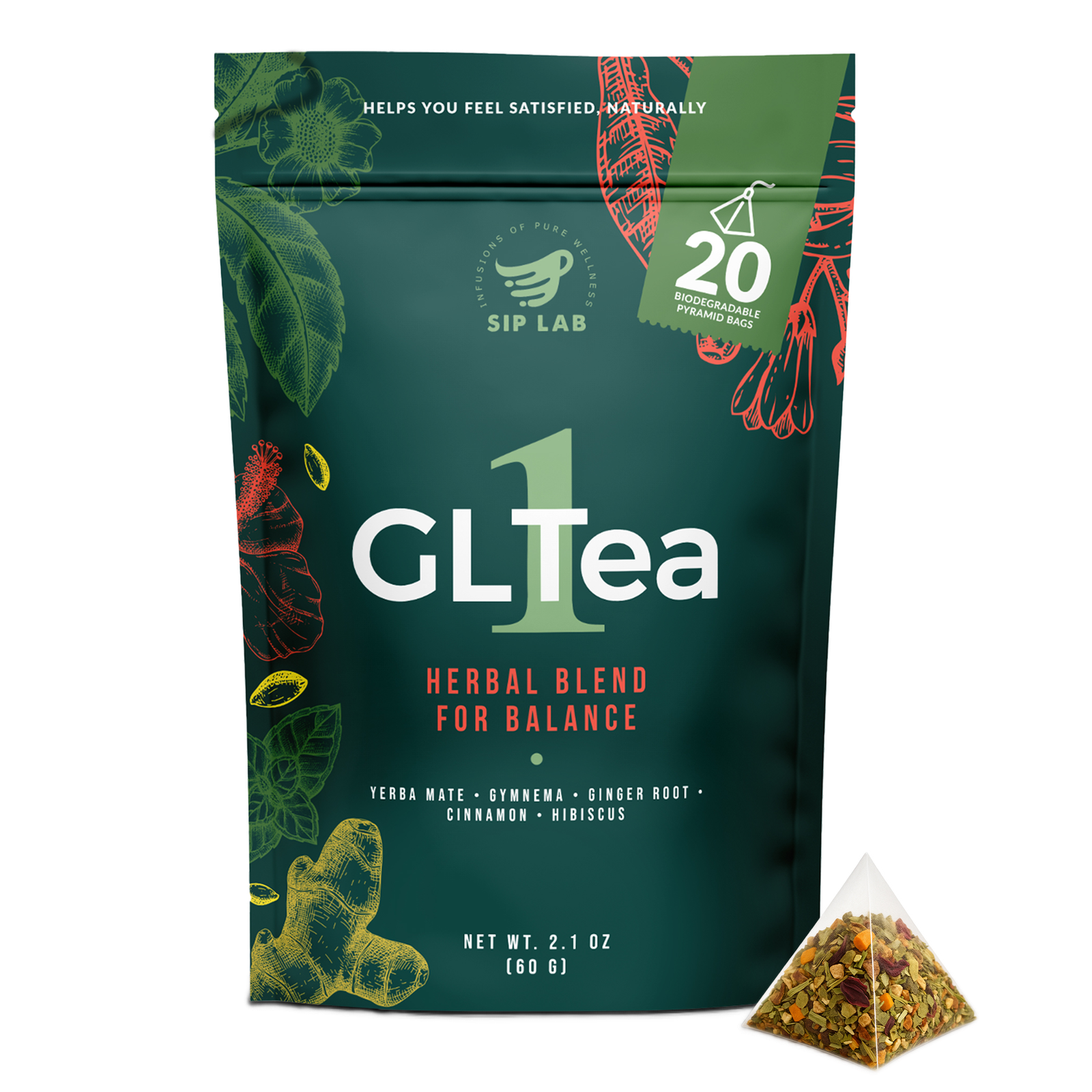
GLTea-1 — Herbal Blend for Balance
Yerba Mate + Gymnema + Ginger Root + Ceylon Cinnamon + Hibiscus
20 biodegradable pyramid bags • $12.99 (on sale) • Under $0.65/cup • No laxatives, no fillers